
Case Studies
Case Study: Amazon Account Suspended for Inauthentic Product — How We Reinstated the Seller Account
March 13, 2026
Key Takeaways
- An Amazon seller successfully reinstated their account after suspension for inauthentic product claims on an ASIN that had been listed but never actually sold.
- Amazon's automated system repeatedly requested invoices for a product with zero sales history, creating a rejection loop despite the seller explaining no invoice existed.
- The reinstatement appeal succeeded by providing invoices for other products from the same brand and supplier to prove legitimate sourcing and product authenticity.
- Persistent follow-up and structured communication with Amazon's Account Health team was required to break through automated responses and secure proper case review.
- Listing a product on Amazon does not guarantee an invoice exists, particularly when inventory was never purchased because the ASIN generated no sales.
Amazon Account Suspended for Inauthentic Product: Successful Reinstatement Case Study
One of the most stressful situations for Amazon sellers is receiving a Seller Performance notification claiming they sold an inauthentic product. These suspensions are particularly complex because Amazon typically requires invoices from authorized suppliers to verify product authenticity. Without proper documentation, the seller risks losing their account permanently.
However, the reinstatement process becomes even more complicated when Amazon requests documentation that does not actually exist.
This case study explains how we successfully handled a challenging Amazon seller account suspension for an alleged inauthentic product, where the requested invoice was impossible to provide because the product had never been sold in the first place.
Despite multiple rejected appeals and repeated generic responses from Amazon, we eventually managed to break through the automated rejection loop and secure full account reinstatement.
For official guidelines, refer to Amazon's Product Authenticity requirements.
The Challenge: Amazon Seller Account Deactivated Without Sales
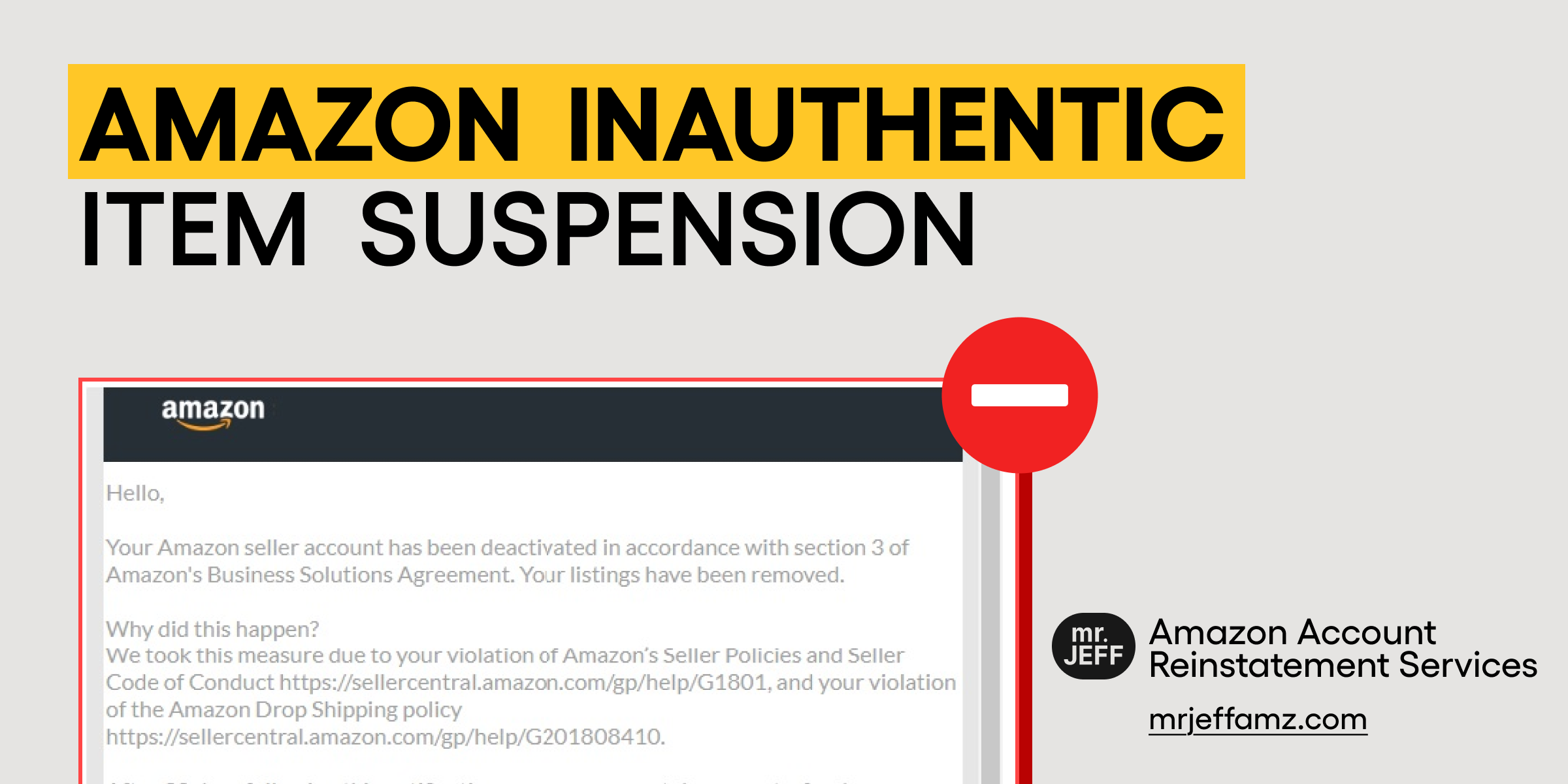
The client contacted us after his Amazon seller account was deactivated due to an alleged inauthentic product violation. Amazon requested invoices for a specific ASIN that was supposedly flagged for selling an inauthentic product.
The problem was clear immediately:
The seller had never actually sold that product.
The ASIN had only been listed in the seller's catalog, but it had zero sales history. Despite this, Amazon continued requesting invoices for that exact product.
Before contacting us, the client attempted to resolve the issue independently. He submitted several appeals explaining that the ASIN had never generated sales and therefore no invoice existed for that specific product.
Each submission resulted in the same generic Seller Performance response asking again for invoices for that exact product.
Case Investigation: Verifying Product Authenticity
Once we took over the case, we began by collecting all available information from the client and reviewing the account history.
Although the specific ASIN had no sales, the seller did have sales of other products from the same brand.
These products were sourced from the same supplier. Our first step was to investigate the supplier.
We verified that the supplier was legitimate and capable of providing authentic inventory for the brand. This was an important step in establishing that the seller's sourcing process was compliant with Amazon's product authenticity requirements.
To strengthen the case further, we conducted additional research on the brand's rights owner.
The investigation confirmed that:
There were no restrictions from the brand owner preventing third-party sellers from selling their products on Amazon.
The brand did not enforce exclusive distribution policies for the marketplace.
This information helped confirm that the seller's sourcing model was legitimate and did not violate Amazon's policies.

Amazon Reinstatement Appeal Strategy
Based on our findings, we developed a detailed Amazon reinstatement strategy.
The appeal included several key elements:
1. Clear Explanation of the Situation
We explained that the ASIN requested by Amazon had never generated sales, which is why invoices for that specific product did not exist.
2. Proof of Legitimate Product Sourcing
We provided invoices and documentation for alternative products from the same brand that the seller had legitimately purchased and sold.
3. Evidence Supporting Product Authenticity
We demonstrated that the inventory was sourced from a reliable supplier and that the brand itself did not restrict resale on Amazon.
4. Structured Communication with Amazon
We carefully structured the appeal so that the Seller Performance team could easily understand the context of the case, avoiding confusion about the missing invoice.
The Amazon Appeal Process: Breaking the Rejection Loop
The reinstatement process turned out to be more complex than initially expected.
Even after submitting the detailed appeal, Amazon continued responding with the same requests for invoices for the specific ASIN.
However, instead of giving up, we continued working through the case step by step.
After several rounds of communication with the Account Health team, we eventually identified the wording and explanation that allowed the case to move forward.
Through additional submissions and persistent follow-up, the appeal was finally reviewed properly by Amazon's team.
✅ Result: Amazon Seller Account Reinstated
Once the case received a proper review, Amazon recognized the issue. Shortly afterward:
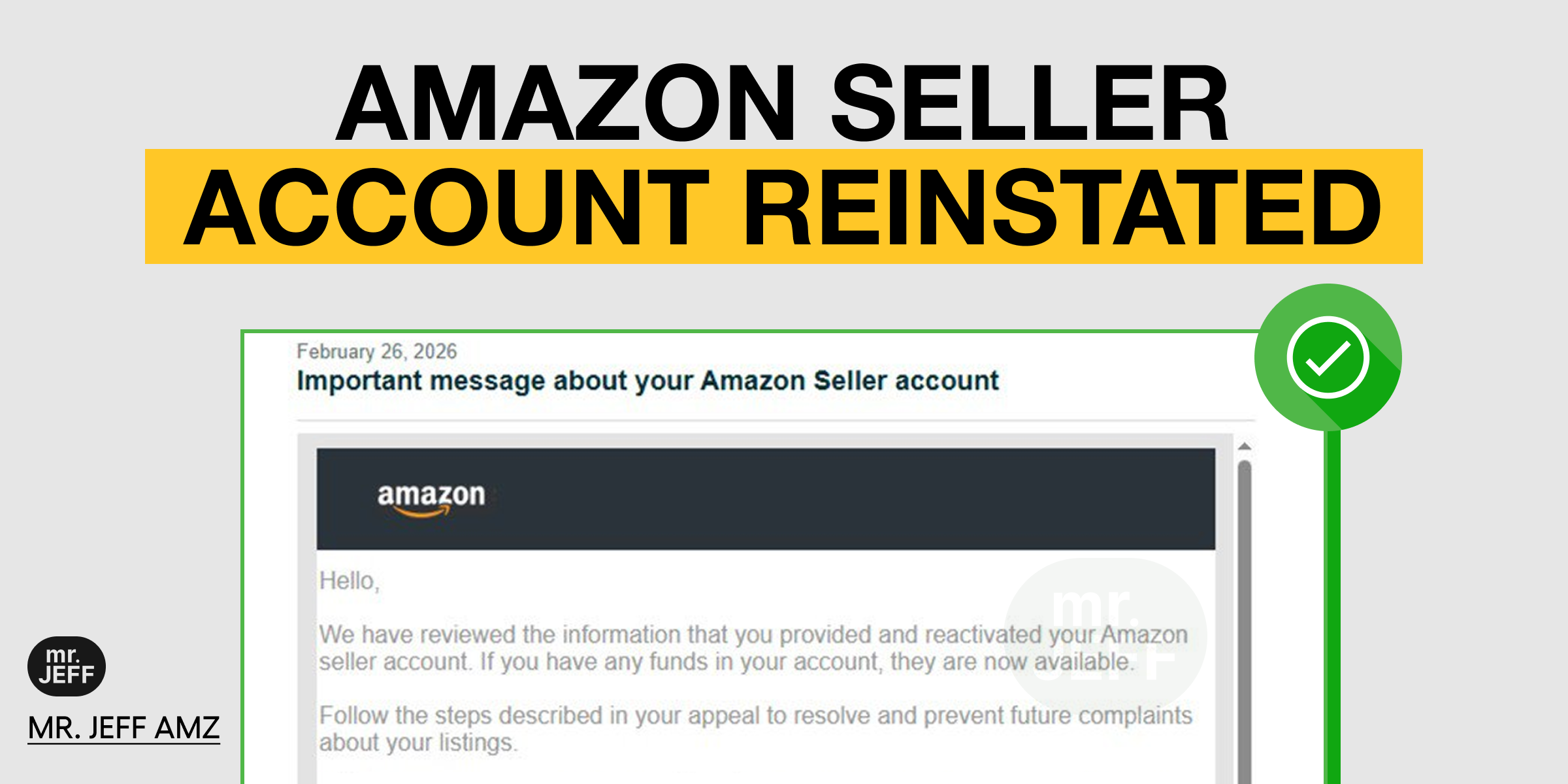
The Amazon seller account was reinstated
Selling privileges were restored
The seller was able to resume normal operations
The key to resolving the case was not simply providing more documents — it was clearly explaining why the requested document did not exist and providing alternative evidence proving product authenticity.
Key Takeaways for Amazon Sellers Facing Suspension
Listing a product does not always mean an invoice exists: If a product is listed but never sold, it is possible that the seller never purchased inventory for that ASIN.
Generic appeals rarely resolve complex suspensions: Most sellers submit appeals that repeat the same explanation without addressing Amazon's specific concerns.
Alternative documentation can support authenticity: Invoices from the same supplier for other products from the same brand can help demonstrate legitimate sourcing.
Persistence is often required: Amazon's automated responses can create rejection loops that require careful follow-up and structured appeals to overcome.
Need Help With Your Amazon Account Suspension?
If your Amazon seller account has been suspended, it's important to approach the Amazon account reinstatement process strategically.
Whether the issue involves inauthentic product claims, identity verification failure, policy violations, related accounts, dropshipping violations, or intellectual property complaints, submitting the wrong appeal can lead to repeated rejections and long delays.
At Mr. Jeff AMZ, our specialists have helped reinstate hundreds of Amazon seller accounts by preparing strong, Amazon-compliant appeals and guiding sellers through the entire Amazon account reinstatement process — from case investigation and documentation review to structured communication with Amazon's Seller Performance and Account Health teams.
📌 Get a Free Expert Case Review
If your Amazon seller account has been suspended, don't risk getting stuck in an endless appeal rejection loop.
Request a Free Expert Case Review, and our reinstatement specialists will analyze your suspension case and prepare a professional strategy to restore your Amazon selling privileges as quickly and safely as possible.
How it works:
Fill out the form on our website.
Tell us about your Amazon suspension case.
Get a personal consultation with an Amazon reinstatement expert.
Explore our other case studies to see more real examples of successful Amazon seller account reinstatements.
👉 More Case Studies
— The Mr. Jeff AMZ Team

Author
Rick
Senior Reinstatement Consultant at Mr. Jeff AMZ
Rick is a Senior Reinstatement Consultant at Mr. Jeff AMZ with 6 years of experience appealing Amazon suspensions. He specializes in solving complex Amazon issues like Section 3, IP, and review-related enforcement, helping sellers recover deactivated accounts. His superpower is knowing Amazon's policies better than most Amazon reviewers do and building a compelling, watertight case for any position.
Connect on LinkedInFrequently Asked Questions
What should I do if Amazon suspends my account for inauthentic products on items I've never sold?
First, gather all documentation showing the ASIN has zero sales history. Do not repeatedly submit the same appeal explaining you never sold the product, as this often triggers automated rejections. Instead, focus on demonstrating your legitimate sourcing practices for related products from the same brand and supplier.
Can I get my Amazon seller account reinstated without providing the exact invoices Amazon requests?
Yes, it's possible but requires a strategic approach. If the requested invoices don't exist (like for unsold products), you need to provide alternative evidence of authentic sourcing, such as invoices for similar products from the same brand and supplier, along with supplier verification documentation.
What documentation should I gather when appealing an inauthentic product suspension?
Essential documentation includes:
- Invoices for any products from the same brand you have sold
- Supplier verification and legitimacy proof
- Evidence that the brand allows third-party sellers
- Sales history reports showing zero sales for the flagged ASIN
Why does Amazon keep sending generic responses asking for the same invoices?
Amazon's initial review process is often automated, which can create a frustrating loop of generic responses. Breaking through this requires crafting appeals that trigger human review by presenting comprehensive documentation and addressing the underlying concern about your sourcing practices, not just the specific ASIN.
How important is supplier verification in resolving inauthentic product claims?
Supplier verification is critical to establishing your legitimacy as a seller. Even if you can't provide invoices for a specific ASIN, demonstrating that your supplier is authorized and legitimate for the brand helps prove your overall sourcing compliance with Amazon's authenticity requirements.
Should I investigate brand restrictions before appealing an inauthentic product suspension?
Absolutely. Confirming that the brand doesn't restrict third-party sellers or enforce exclusive distribution policies strengthens your appeal significantly. This information helps demonstrate that your selling model is legitimate and doesn't violate any brand or Amazon policies.
What's the biggest mistake sellers make when appealing inauthentic product suspensions?
The biggest mistake is repeatedly submitting the same explanation without providing additional context or documentation. If Amazon asks for something that doesn't exist, don't just keep saying it doesn't exist—instead, provide alternative evidence that addresses their underlying concern about product authenticity and your sourcing practices.