News
Amazon BSA Update (March 4, 2026): The New Agent Policy & What Sellers Must Do
February 24, 2026
Key Takeaways
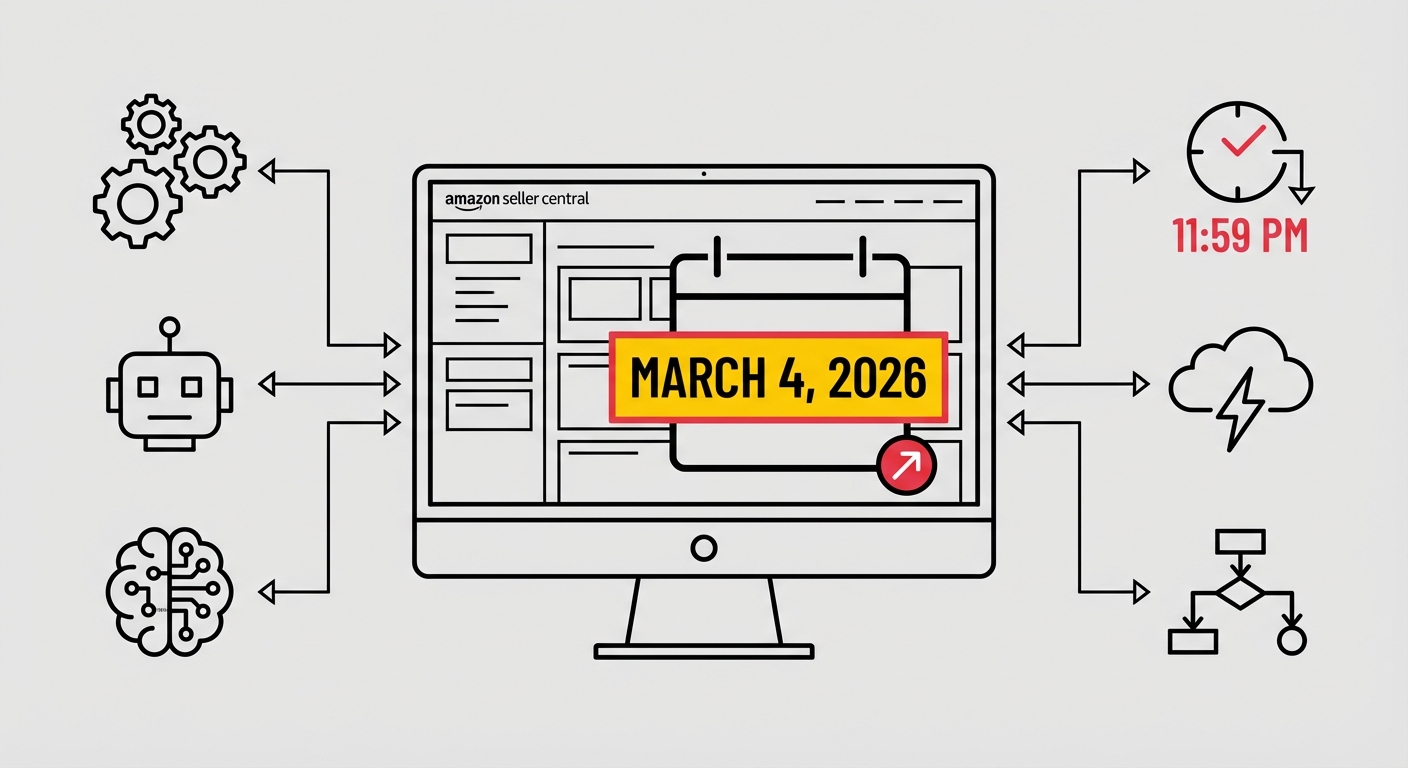
- Amazon's updated Business Solutions Agreement and new Agent Policy take effect March 4, 2026, imposing stricter rules on automation and AI tools accessing Seller Central.
- Sellers using repricers, PPC automation, inventory sync tools, browser extensions, or AI assistants must audit compliance before March 4, 2026 to avoid suspension risk.
- Under the new Agent Policy, sellers remain accountable for third-party tool behavior, even if the software vendor causes non-compliant automated access to Amazon services.
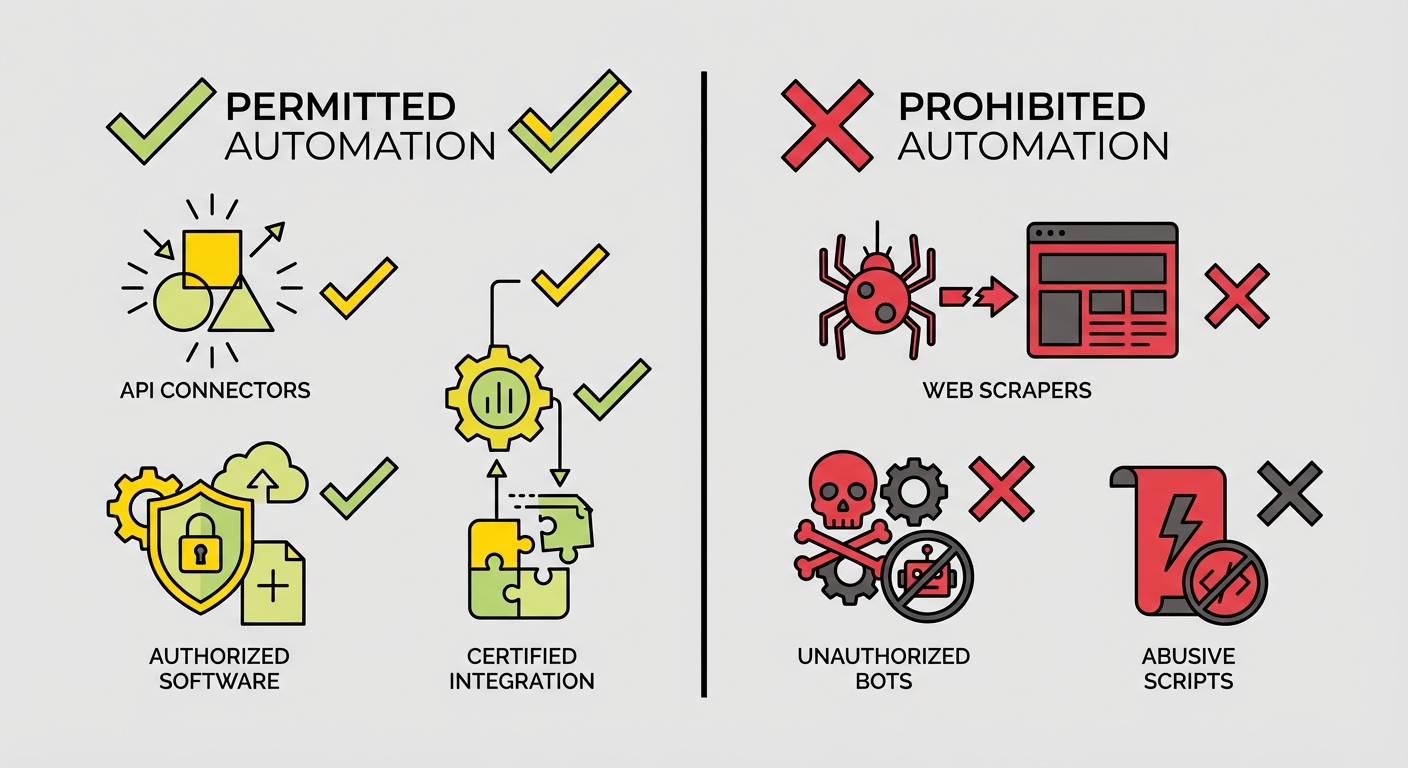
- Prohibited automation includes web scraping, unauthorized bots, tools bypassing official APIs, and any system simulating human behavior to circumvent Amazon restrictions.
- Compliance requires documenting SP-API migration status from all tool providers, revoking non-compliant access, and maintaining a fast off-switch for all automation.
Amazon is updating the Amazon Services Business Solutions Agreement (BSA) effective March 4, 2026. The update introduces a new Agent Policy and adds stricter language around automation and AI systems that interact with Amazon services (including Seller Central). If your business uses repricers, inventory sync tools, PPC automation, browser extensions, scripts, or AI assistants — this change directly affects your risk profile and compliance obligations.
This article breaks down what changed, what Amazon is signaling, and a practical seller-focused checklist to reduce enforcement risk.
Understanding the Amazon BSA Update 2026: What's Really Changing
The Amazon BSA update 2026 represents the most significant overhaul of seller policies in recent years. At its core, these changes reflect Amazon's determination to maintain marketplace integrity while cracking down on unauthorized automation and data access practices.
For official guidelines, refer to Amazon Services Business Solutions Agreement and Amazon Seller Code of Conduct.
Key Changes That Impact Every Seller
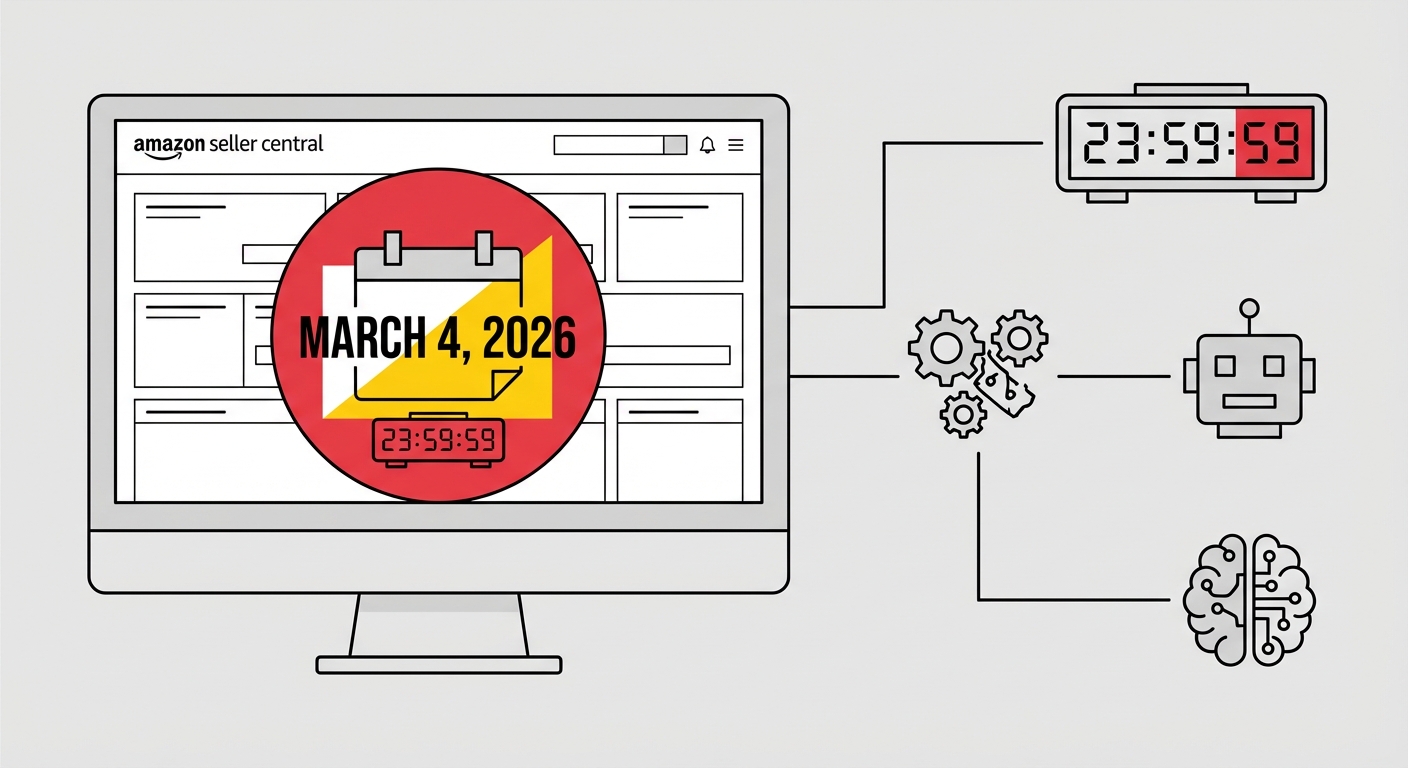
Amazon’s Seller Central announcement confirms three main areas of change effective March 4, 2026:
A new Agent Policy for automated systems and AI usage
Amazon is formalizing rules for “agents” (automation and AI-driven systems) that access Amazon services. The announcement highlights new requirements for automated systems, including the expectation that they comply with the Agent Policy and follow Amazon’s usage constraints.
Updated AI / machine learning restrictions
Amazon is also tightening language around how “Amazon materials” and service outputs can be used—especially in contexts tied to AI/ML, data use, and prohibited extraction behaviors. Industry coverage and the “Changes to the BSA” help page point to clearer boundaries around AI-related usage and prohibited behaviors.
Dispute resolution updates (arbitration language)
The Seller Central post states Amazon is updating dispute resolution terms. For sellers, this matters because it impacts the process and framework for disputes in the event of serious conflicts.
The Timeline You Can't Ignore
February 17, 2026 – Amazon officially announced updates to the Business Solutions Agreement (BSA) and introduced the new Agent Policy governing automation and AI tools inside Seller Central.
March 4, 2026 – The updated BSA and Agent Policy go into effect. From this date forward, any automation or AI system interacting with Amazon services must comply with the new requirements.
This gives sellers a short compliance window. If you rely on repricers, PPC automation, inventory sync tools, scripts, or AI assistants, you should audit and adjust your setup before March 4 to avoid potential enforcement, account flags, or suspension risks. The deadline is not theoretical. It’s operational.
Why the New Agent Policy Matters for Amazon Sellers
Most sellers don’t think of tools as “agents.” Amazon does.
If a tool can take actions or pull data inside Seller Central (or through connected mechanisms), Amazon may view it as automated access. That means the seller—not the software vendor—can take the hit if the tool’s behavior is non-compliant.
This is why multiple industry sources are framing the update as a compliance deadline for sellers who use automation (not just software providers).
Which Tools Are Most Likely Affected
Based on Amazon’s own framing of “AI usage and automated systems,” and how sellers typically operate, the highest-risk categories include:
Repricers / pricing bots (automatic price changes, frequent intervals)
Inventory sync + order routing tools (multi-channel automation, stock pushes)
PPC automation (rule-based bids, AI bidding tools, bulk campaign changes)
Bulk listing automation (scripts, browser automation, extensions)
AI “Seller Central assistants” that log in or simulate actions
The key concept isn’t “AI” specifically — it’s automated interaction with Amazon services and whether that automation behaves within policy boundaries.
Amazon Seller Central Automation Policy: Navigating the New Landscape
The updated Amazon Seller Central automation policy fundamentally redefines what constitutes acceptable automation. Understanding these nuances is crucial for avoiding an Amazon Agent Policy suspension.
Permitted vs. Prohibited Automation
What's Still Allowed:
API-compliant inventory management systems
Authorized repricing tools using SP-API
Order management software with proper authentication
Analytics platforms that respect data access limitations
What's Now Forbidden:
Web scraping tools that bypass official APIs
Unauthorized bots for competitive intelligence
Automated review solicitation systems outside Amazon's framework
Any tool that violates the SP-API terms of service
Amazon Third-Party Tools Compliance: A Complete Checklist
Achieving Amazon third-party tools compliance requires a systematic approach. This comprehensive checklist will guide you through the essential steps:
Immediate Action Items
Audit Your Current Tool Stack: Create a comprehensive inventory of all third-party applications accessing your Amazon data
Verify SP-API Compliance: Contact each tool provider to confirm their migration status and timeline
Review Authorization Scopes: Ensure tools only access necessary data with appropriate permissions
Update Integration Settings: Revoke access for non-compliant tools and update API credentials
Documentation Requirements
Maintaining proper documentation is essential for defending against potential suspensions. Your compliance folder should include:
Written confirmations from tool providers regarding SP-API compliance
Screenshots of authorization settings and access permissions
Dated records of when you implemented changes
Correspondence with Amazon regarding compliance questions.
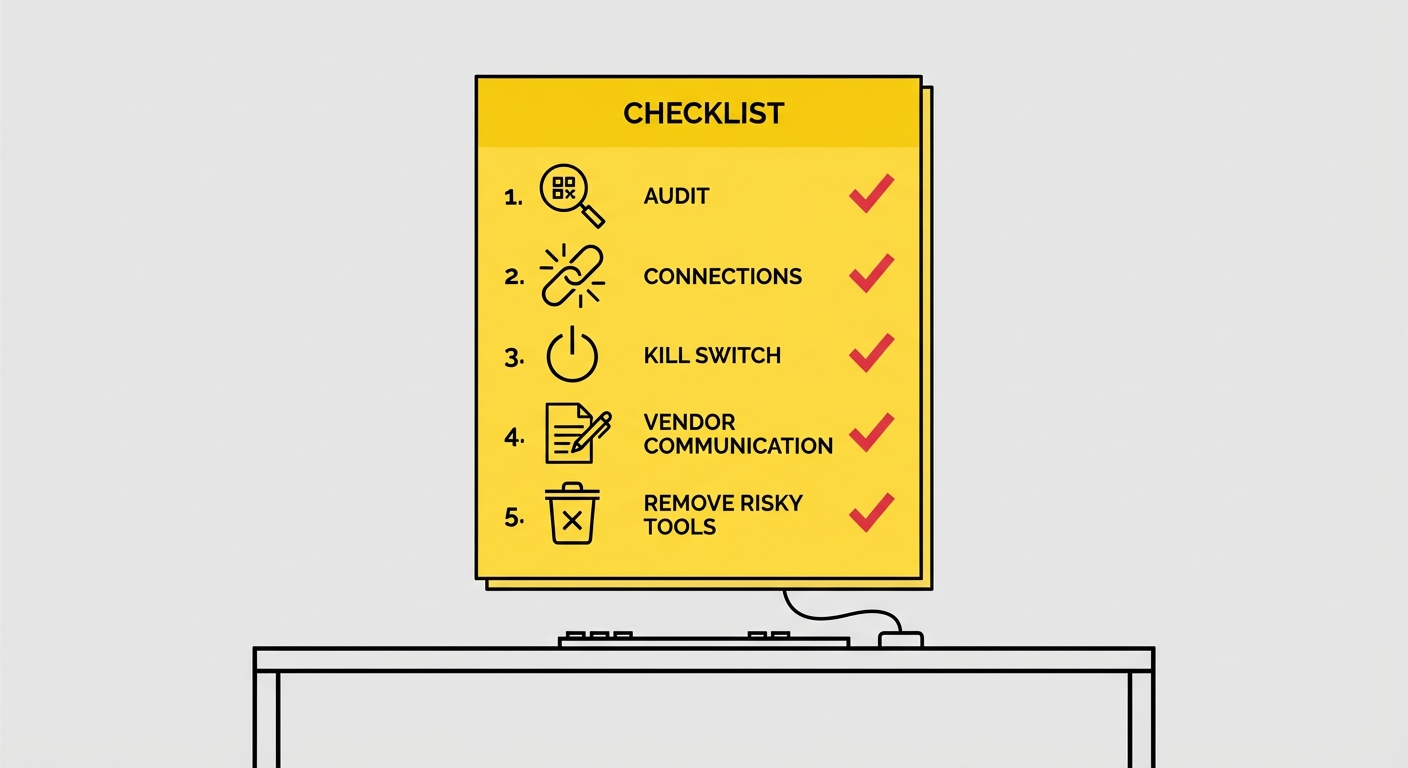
Seller Checklist: How to Reduce Risk Before March 4, 2026
Step 1: Audit every tool with access
Make a list of everything that touches your Amazon account:
SP-API apps
browser extensions
repricers
inventory tools
PPC platforms
internal scripts/macros
agencies/VA workflows that rely on automation
Step 2: Identify how each tool connects
For each tool, document:
Access method (SP-API, browser extension, automation scripts)
Permissions/scopes (what it can read/write)
Who controls credentials
How quickly you can disable it
This matters because Amazon’s new approach is about accountability: sellers need to know what is operating inside their account environment.
Step 3: Ensure you can stop automation immediately
Several industry analyses emphasize the need for a fast off-switch (“kill switch”) mindset: if Amazon flags behavior or requests changes, you must be able to stop automation quickly.
Step 4: Vendor due diligence (get answers in writing)
Ask your software providers:
How they comply with Amazon’s updated BSA/Agent Policy requirements
Whether they can clearly identify automated activity where required
Whether they prohibit scraping or non-approved data extraction
What their incident response process looks like if Amazon flags access
Step 5: Remove “gray-area” automation
If you’re using tools that:
simulate human behavior to bypass restrictions,
scrape Seller Central,
or operate without clear permission boundaries,
you’re increasing enforcement risk under a tightening policy environment..
Best Practices for Ongoing Compliance
Maintaining compliance isn't a one-time event—it requires ongoing vigilance and adaptation. Implement these best practices to stay ahead of policy changes:
Establish a Compliance Calendar
Weekly: Review any new Amazon communications or policy updates
Monthly: Audit active third-party tool permissions and usage
Quarterly: Conduct comprehensive compliance reviews
Annually: Review and update all vendor agreements
Build Relationships with Compliant Vendors
Partner only with established tool providers who demonstrate:
Clear SP-API compliance documentation
Transparent data handling practices
Regular security audits and certifications
Responsive support for compliance questions
Conclusion: The Time for Action is Now
The Amazon Services Business Solutions Agreement updates represent a watershed moment for sellers. Those who act decisively to ensure compliance will emerge stronger and more competitive. Those who delay face the very real risk of amazon seller account reinstatement battles that could cripple their businesses.
Don't wait until you're facing a suspension notice to take action. The investment in compliance today whether through internal efforts or professional assistance — pales in comparison to the potential cost of non-compliance tomorrow.
If you're unsure about your compliance status or need expert guidance navigating these complex changes, consider reaching out to specialists who understand the intricacies of Amazon's policies and can help ensure your business remains in good standing. The deadline is approaching fast, and the time for action is now.
Remember: In the world of Amazon selling, compliance isn't just about following rules—it's about protecting the business you've worked so hard to build. Make compliance your priority today, and secure your selling future for tomorrow.
What to Do If You’re Already Flagged or Suspended
If your Amazon account or listing is already under review, avoid trial-and-error changes and inconsistent explanations. The right move is to:
stop risky automation,
document your changes,
respond through the correct Seller Central workflow,
escalate only when the case requires it.
At Mr. Jeff AMZ, we help sellers diagnose the real trigger behind enforcement actions and build a clean, policy-aligned recovery strategy—especially for complex cases where automation, access, or system behavior may be part of the story.
Get a free expert case review and understand your safest next steps before you submit anything that locks in a bad record.

Author
Rick
Senior Reinstatement Consultant at Mr. Jeff AMZ
Rick is a Senior Reinstatement Consultant at Mr. Jeff AMZ with 6 years of experience appealing Amazon suspensions. He specializes in solving complex Amazon issues like Section 3, IP, and review-related enforcement, helping sellers recover deactivated accounts. His superpower is knowing Amazon's policies better than most Amazon reviewers do and building a compelling, watertight case for any position.
Connect on LinkedInFrequently Asked Questions
When do the new Amazon BSA updates take effect, and what is the deadline for compliance?
The updated Business Solutions Agreement (BSA) and new Agent Policy take effect on March 4, 2026. Amazon announced these changes on February 17, 2026, giving sellers approximately two weeks to ensure compliance. This short window means sellers need to act immediately to audit and adjust their automated tools and AI systems.
What types of seller tools are affected by Amazon's new Agent Policy?
The Agent Policy affects any automated tool that interacts with Amazon services, including:
- Repricers
- Inventory sync tools
- PPC automation software
- Browser extensions
- Scripts
- AI assistants
What are the main changes in Amazon's BSA update for 2026?
The BSA update includes three critical changes: 1) A new Agent Policy governing all automated systems and AI usage, 2) Stricter restrictions on AI/machine learning applications and how Amazon data can be used, and 3) Updated dispute resolution terms affecting the arbitration process. These changes represent the most significant policy overhaul in recent years.
What happens if I don't comply with the new Amazon BSA requirements?
Non-compliance with the updated BSA could result in account suspension or termination. Amazon may also flag your account for enforcement actions if your automated tools or AI systems violate the new Agent Policy. Given the operational nature of this deadline, sellers face immediate risk if they continue using non-compliant tools after March 4, 2026.
Do I need to worry about the Agent Policy if I only use official Amazon tools?
The article suggests that any third-party automation tool that accesses Amazon services falls under the Agent Policy. While official Amazon tools are likely compliant, sellers using any third-party repricers, inventory management systems, or automation software need to verify these tools meet the new requirements before the March 4 deadline.
What should I do immediately to prepare for these BSA changes?
You should conduct an immediate audit of all tools and systems that interact with your Amazon seller account. Identify every repricing tool, inventory syncing software, PPC automation, browser extension, script, or AI assistant you use. Contact your software providers to confirm their compliance with Amazon's new Agent Policy, and be prepared to switch providers or adjust your processes before March 4, 2026.