Case Studies
Case Study: Amazon Account Reinstated After an IP Rights Violation
February 26, 2026
Key Takeaways
- Amazon deactivated an authorized reseller's account for IP violation caused by trademark misuse and incorrect logos in a listing the seller did not create.
- Authorization and invoices do not protect sellers from deactivation if the detail page they sell under contains trademark misuse or non-compliant content.
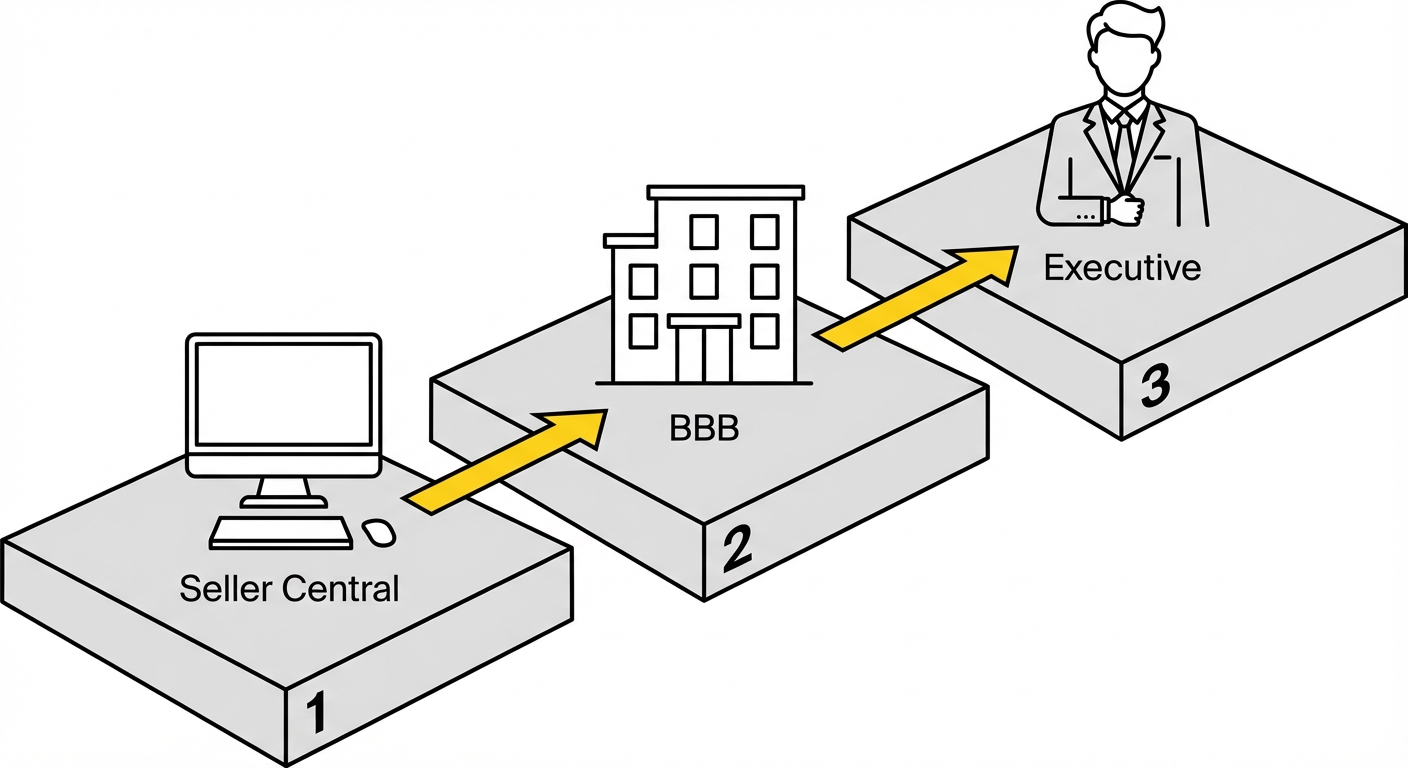
- The case required correcting the listing title and images first, then escalating through Seller Central appeals, BBB, and executive review over two months.
- The brand owner's account remained active while the authorized reseller was suspended, even though the brand owner created the non-compliant listing.
- Sellers should audit listing titles and images before selling under any ASIN and avoid detail pages that reference other brands' logos or trademarks.
When Amazon deactivates a seller account for an Intellectual Property (IP) rights violation, the first instinct is usually to prove authorization and move on.
But this case shows a hard truth many experienced sellers learn the hard way:
Authorization does not protect you from listing-level violations. If the detail page is non-compliant — your account is at risk.
In this case, our client was authorized. They also did not create the listing. Yet Amazon still held them responsible for selling under a detail page that contained trademark misuse and incorrect brand logos.
Below is the exact strategy we used to achieve Amazon account reinstatement after standard channels failed — including a full breakdown of what triggered the enforcement, what we fixed, and why the case required 3-level escalation to executive review.
For official guidelines, refer to Amazon Intellectual Property Policy.
Quick Case Snapshot
Enforcement: Amazon seller account deactivated (IP rights violation)
Seller status: Authorized reseller
Listing ownership: Listing originally created by the brand owner
Root cause: Non-compliant listing content (title trademark misuse + incorrect logos in images referencing another well-known brand)
Challenge: Rights owner’s account stayed active; authorized seller was deactivated
Outcome: Account reinstated after executive-level escalation
Timeline: ~2 months from start of engagement
What Happened
In November 2025, an experienced Amazon seller with over 10 years of marketplace history contacted us after Amazon deactivated their seller account due to an Intellectual Property (IP) rights violation.
At first glance, the case seemed straightforward. The seller was an authorized reseller of the product and had legitimate supply documentation. However, there was a critical detail: they did not create the listing. The detail page had originally been created and managed by the brand owner.
The situation became even more unusual when we discovered that the rights owner’s account remained active, while the authorized seller’s account was suspended. Despite having no control over the listing’s creation, Amazon held our client responsible because they were actively selling under a non-compliant detail page.
That’s why Amazon account deactivated cases, especially IP-related enforcement, often require deeper diagnosis than “we have invoices” or “we’re authorized.”
On Amazon, authorization does not protect you from listing-level violations.
Investigation: Root Cause Analysis
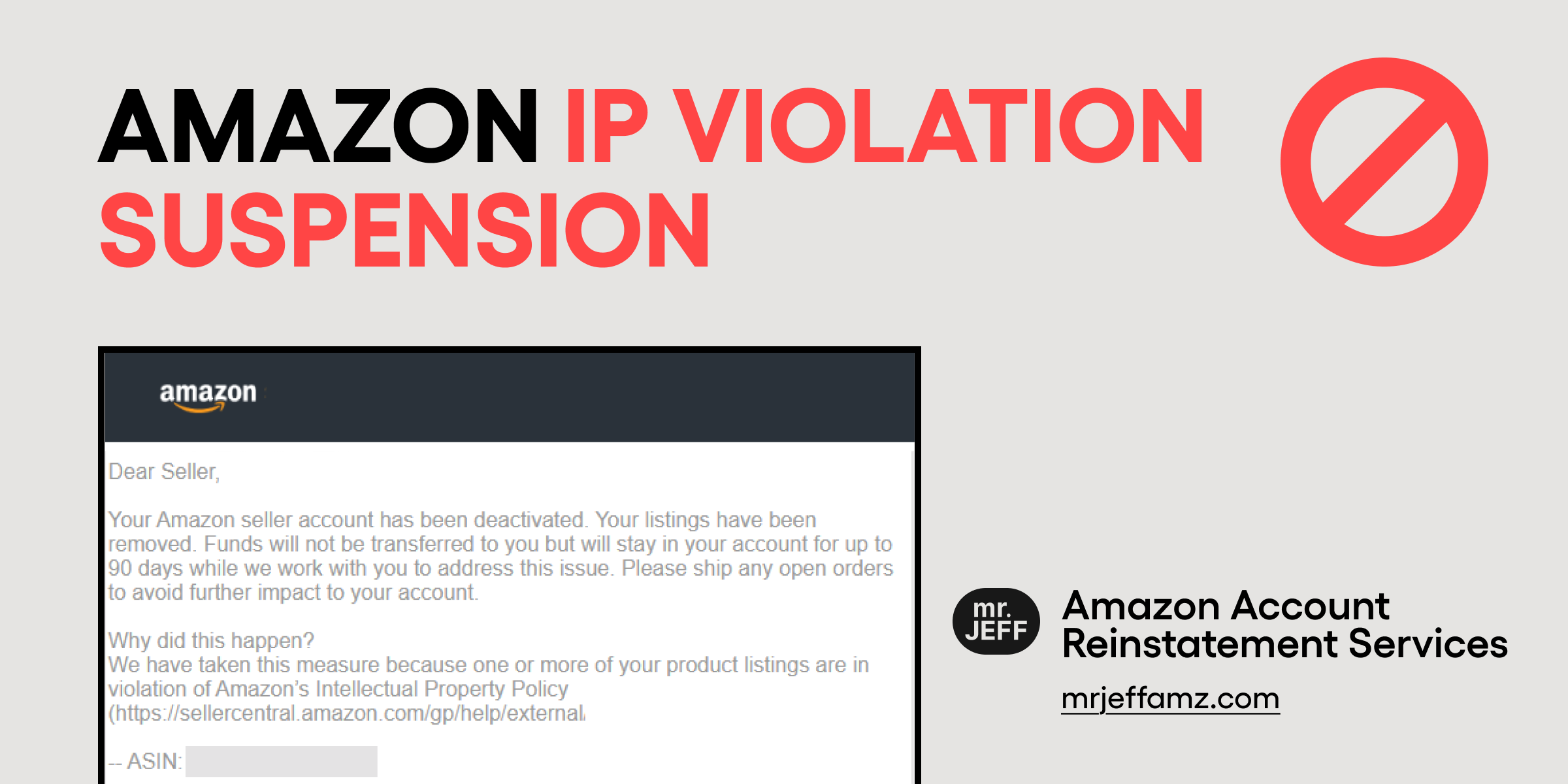
In IP-based suspensions, we never start with assumptions. We validate the trigger by reviewing:
The exact language in the Performance Notification (what Amazon is actually alleging)
The affected ASIN(s) and detail page content history
Title terms, bullets, A+ modules (if relevant)
Main + secondary images for logos, packaging claims, and brand references
Whether the complaint appears to be:
a rights owner complaint,
an automated detection issue,
or a policy enforcement tied to listing content
This level of analysis matters because an Amazon appeal only works when your corrective actions directly address the real violation. If your Plan of Action doesn’t match the root cause, rejection is almost guaranteed.
After carefully reviewing the enforcement notice and the affected ASIN, we confirmed that the issue was not related to authorization, invoices, or sourcing.
The real trigger was inside the listing itself:
Improper use of trademarked terms in the product title
Incorrect use of logos in the images referencing another well-known brand
This is a classic example of a listing-level intellectual property violation — and Amazon treats these very seriously.
Once we confirmed the violation inside the detail page, we understood something important:
Even though the brand owner’s account had not been deactivated yet, they were exposed to the same risk.
That’s why we didn’t focus on simply “explaining” the situation in an appeal. We focused on eliminating the compliance risk first.

Corrective Actions: Fix the Detail Page Before You Appeal
We guided the seller to contact the rights owner immediately and clearly explain:
what parts of the listing were non-compliant,
what needed to be changed,
and why leaving the listing as-is could escalate enforcement.
Changes implemented (before appeal submission)
✅ Title updated to remove improper trademark usage
✅ Images revised to eliminate incorrect logo placements / associations
✅ Compliance-focused alignment across listing assets to reduce further IP risk
Only after the listing was corrected did we proceed to appeal strategy.
Because if the violation is still live, Amazon has no reason to reinstate you, even if you’re authorized.
Level 1: Seller Central Appeal
After the listing corrections were fully implemented, we prepared a structured Amazon Seller Central appeal explaining the entire situation clearly and professionally.
We clearly explained that:
The seller is an authorized reseller
He did not create the listing
The violation was caused by improper trademark usage within the detail page
The issue had been fully corrected
Preventive measures were implemented
Despite aligning the appeal with Amazon’s requirements and eliminating the compliance risk, Amazon continued to reject the submissions through Seller Central.
At this stage, it became clear that standard appeals would not resolve the case and escalation was required.
Level 2: BBB External Escalation
As part of our structured Amazon account reinstatement strategy, we initiated escalation through the Better Business Bureau (BBB).
We compiled:
All prior appeals submitted via Seller Central
Amazon’s rejection responses
Evidence of listing corrections
Proof of authorization
A clear explanation of the root cause and implemented fixes
In some cases, BBB escalation can help increase visibility and move a stalled case forward. In this situation, however, it did not produce a result.
At that point, it was clear the case required a higher-level review.
Level 3: Executive-Level Escalation
After Seller Central appeals failed and BBB escalation did not move the case, we proceeded with executive-level escalation.
This stage requires:
A clean and consistent case narrative
Confirmation that the violation has been fully corrected
Clear corrective and preventive measures
Zero contradictions across previous submissions
At the executive level, the evaluation shifts to three core questions:
Has the compliance risk actually been eliminated?
Is reinstating this seller safe for the marketplace?
Does the seller demonstrate control to prevent recurrence?
Because we already corrected the listing and documented the preventive steps, we were positioned for a successful outcome.
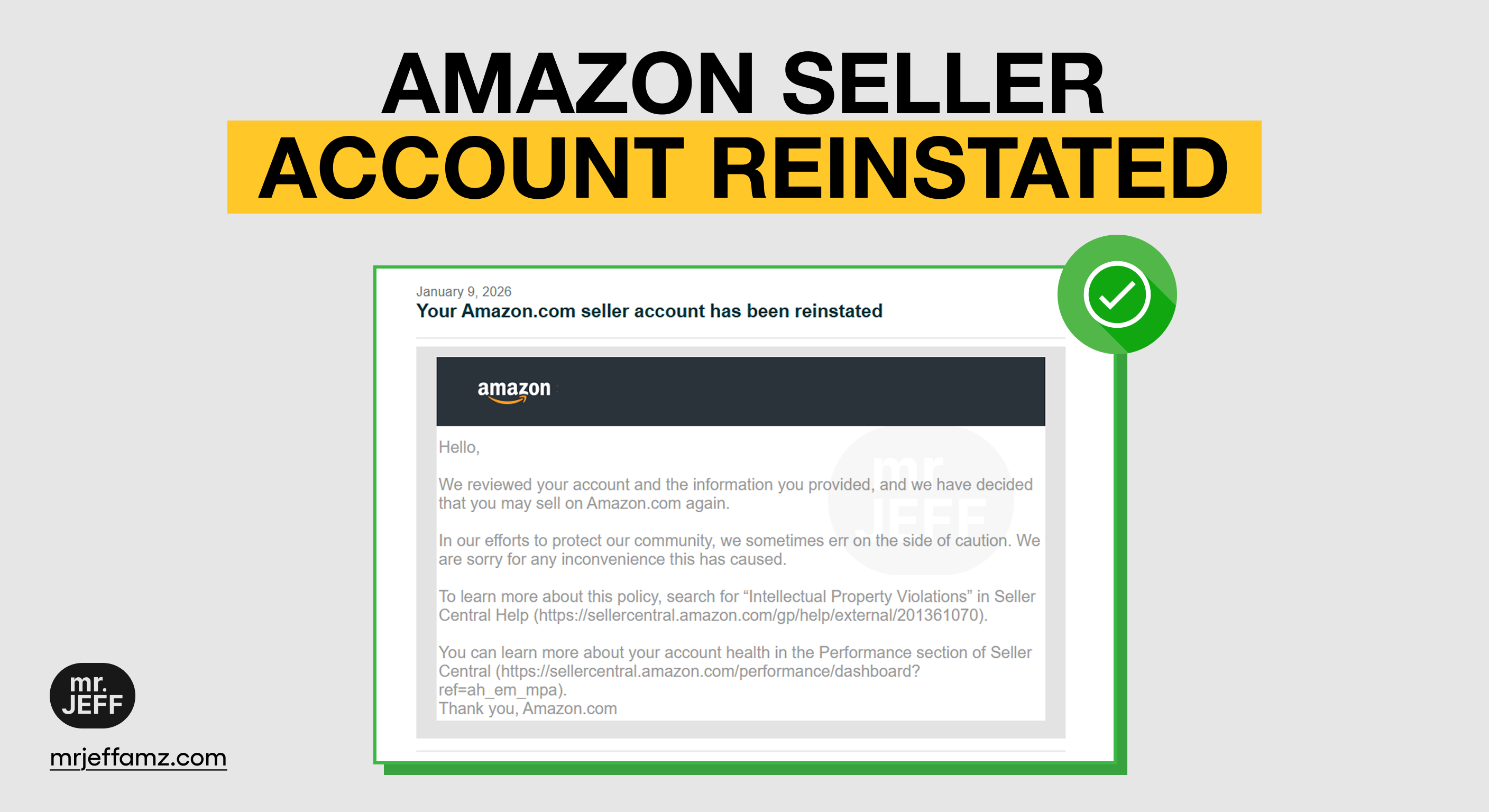
Result: Amazon Account Reinstated
Following the executive-level escalation, Amazon conducted a higher-level review of the case and issued a formal notification confirming account reinstatement.
The seller account was successfully reinstated approximately two months after we began working on the case.
This case confirmed that in complex Amazon IP rights violation suspensions, structured escalation can make the difference between repeated rejections and reinstatement.
In situations like this, professional Amazon reinstatement support isn’t optional — it’s essential.

Preventive Controls We Recommend After Reinstatement
For professional sellers managing multiple ASINs, prevention is cheaper than reinstatement.
Here are controls we recommend implementing:
Pre-flight listing audits (title + images) before jumping on an ASIN
A rule: no selling under a detail page that references another brand’s logo/marks
A process for brand-owner communication when you spot listing compliance risk
Documentation discipline: keep authorization records organized, but don’t rely on them alone
Monitor listing changes (especially titles/images) if you are not the owner.
Professional Amazon Reinstatement Services
Dealing with a suspension can feel overwhelming — but you don't have to face it alone.
Get the Mr. Jeff team of professionals on your side and get back to selling fast.
🔸 Experienced Reinstatement Experts
We work with complex cases every day — including Section 3 violations, related account suspensions, inauthentic claims, dropshipping violations, and IP violations.
The results speak for themselves:
600+ Amazon seller accounts successfully reinstated
100+ verified reviews on Trustpilot & Google
Trusted by professional FBA & FBM sellers worldwide
🔸 Tailored Solutions
We treat every case individually. Every appeal is custom-written to match your specific identify your suspension reason instantly, backed by strong, case-specific documentation. This personalized approach significantly increases your chances of fast and successful reinstatement.
🔸 Personal Appeal Manager
You'll be assigned a dedicated account manager who will guide you step by step through the entire reinstatement process, from case evaluation to final resolution.
🔸 Unlimited Submissions + 3-Level Escalation Strategy
We work on your case until your account is reinstated — no matter how many submissions it takes, with no extra fees.
If standard appeal channels don't produce results, we activate our structured 3-level escalation strategy, utilizing all appropriate and available communication pathways to move your case forward.
Is Your Amazon Seller Account Deactivated?
Don’t waste time on repeated appeal rejections.
Get professional support from the Mr. Jeff AMZ team and return to selling faster.
Contact us for a Free Expert Consultation:
We will review your suspension case individually
Identify the real root cause
Provide a clear, structured reinstatement strategy

Author
Rick
Senior Reinstatement Consultant at Mr. Jeff AMZ
Rick is a Senior Reinstatement Consultant at Mr. Jeff AMZ with 6 years of experience appealing Amazon suspensions. He specializes in solving complex Amazon issues like Section 3, IP, and review-related enforcement, helping sellers recover deactivated accounts. His superpower is knowing Amazon's policies better than most Amazon reviewers do and building a compelling, watertight case for any position.
Connect on LinkedInFrequently Asked Questions
Can I be suspended for an IP violation even if I'm an authorized seller?
Yes, authorization does not protect you from listing-level violations on Amazon. If the detail page contains non-compliant content (trademark misuse, incorrect logos, etc.), you can be held responsible even if you didn't create the listing and have proper authorization.
How to Reinstate an Amazon Account Suspended for an IP Violation?
What specific listing issues can trigger an IP violation?
Common listing-level IP violations include:
- Trademark misuse in titles
- Incorrect brand logos in images
- References to other well-known brands
- Non-compliant packaging claims
How long does it typically take to reinstate an account after an IP violation?
Reinstatement timelines vary significantly based on case complexity. This particular case took approximately 2 months from start of engagement, requiring 3-level escalation to executive review when standard channels failed.
What should I check before selling under an existing listing to avoid IP violations?
Before selling under any listing, review:
- Title for trademark compliance
- All images for incorrect logos or brand references
- Bullet points and A+ content modules
- Overall listing history and content changes
When should I consider escalating beyond standard Amazon appeal channels?
Consider escalation when standard appeals fail despite having clear evidence of compliance or authorization. Executive-level escalation may be necessary when there's a disconnect between your actual violation and Amazon's enforcement action, especially in cases involving listing-level issues you didn't create.