
Case Studies
Case Study: Amazon Account Reinstated After Related Account Suspension
February 11, 2026
Key Takeaways
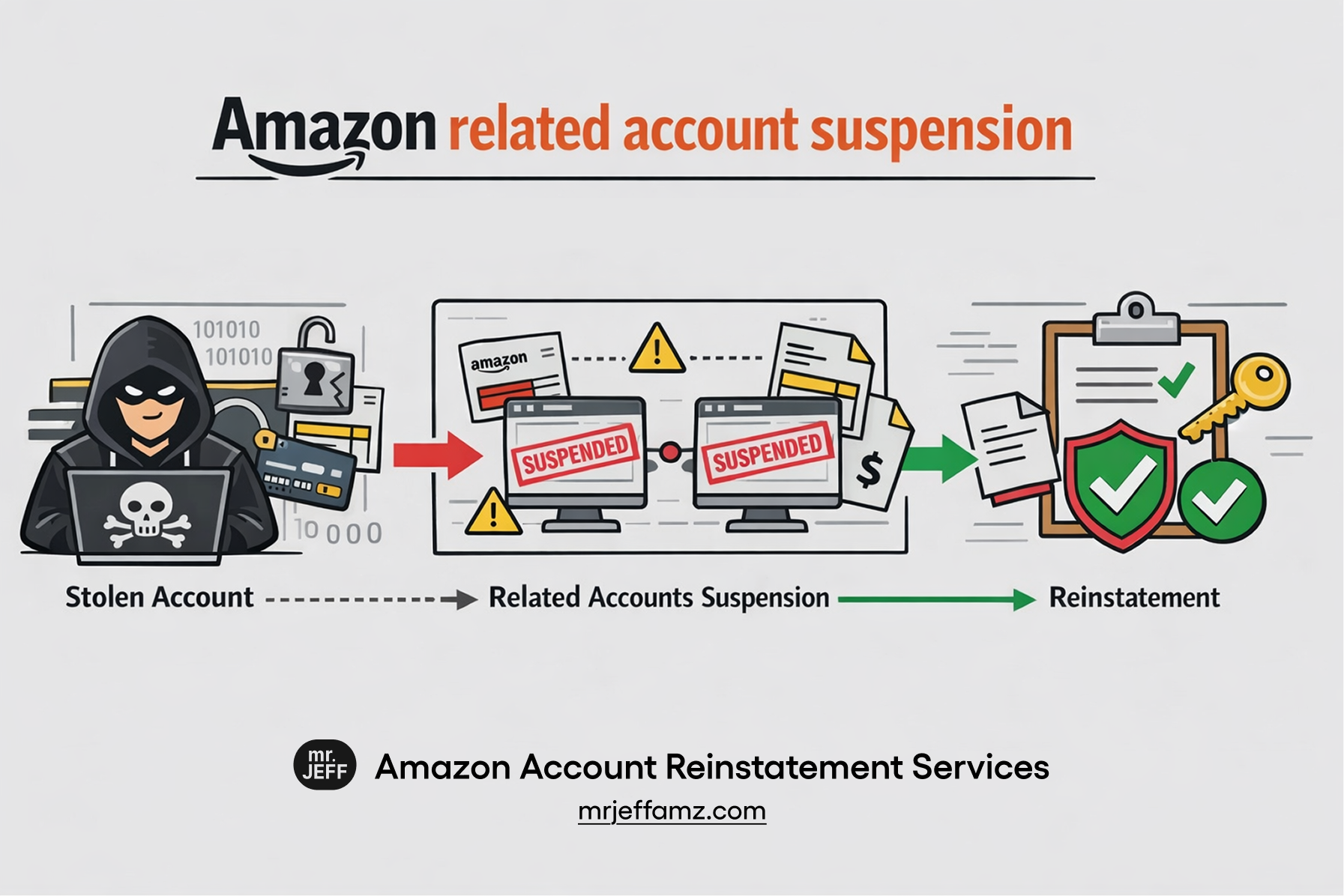
- A seller with 15 years on Amazon had his account reinstated after a related account suspension caused by a previously hacked and deactivated account he once owned.
- Three structured Plan of Action appeals were rejected by Amazon Seller Performance despite police reports and theft documentation before escalation became necessary.
- Two formal complaints filed through the Better Business Bureau led to senior compliance review and full account reinstatement within six weeks total resolution time.
- Amazon's automated systems flag related accounts based on ownership history even when one account was stolen, requiring documented loss of control and structured appeals to overcome.
- Reframing the case from two related accounts to verified theft with documented loss of control was critical to distinguishing intentional violations from compromise situations.
Amazon’s related account suspension policy is strict and largely automated.
If the system detects a connection between two seller accounts, especially if one has been deactivated — enforcement is immediate.
The most common causes of a related account suspension include:
Shared IP addresses or devices
Overlapping business addresses
Linked bank accounts or credit cards
Shared login credentials
Common supplier or operational data
Previously deactivated accounts tied to the same owner
Amazon’s systems flag risk signals — not intent. Once a connection is detected, selling privileges can be removed without prior warning.
But what happens when the related account was stolen?
This case study explains how an Amazon seller account was reinstated after being linked to a previously hacked and deactivated account — despite multiple auto-rejected appeals and initial denial from Seller Performance.
The Crisis
In 2025, an experienced Amazon seller named David contacted our team with a challenging situation.
David had been selling on Amazon for more than 15 years. His account had a long operational history, established performance metrics, and no pattern of policy abuse.
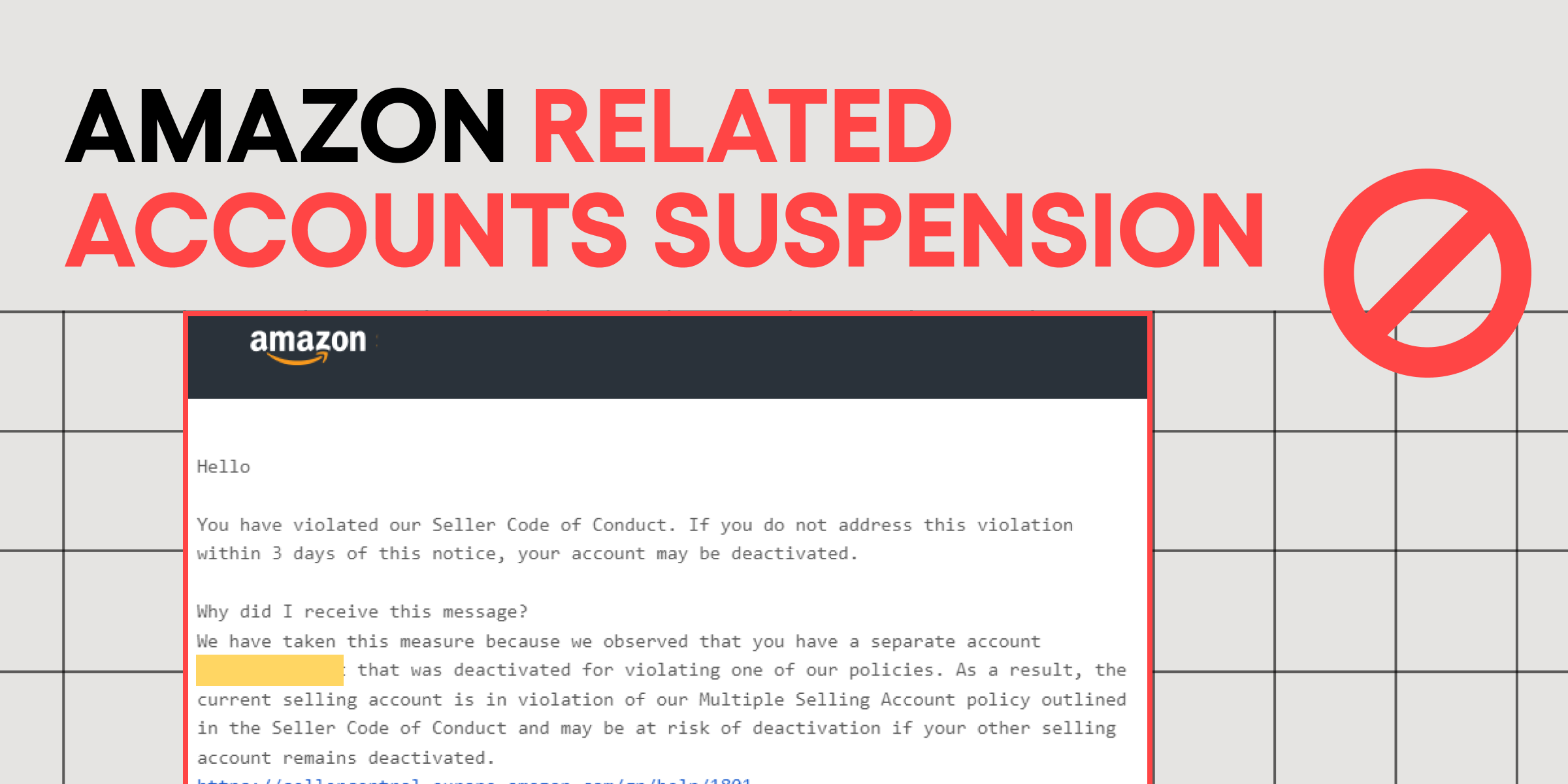
Without prior warning, his seller account was deactivated under the Related Accounts Policy. Amazon stated that his account was linked to another previously deactivated account.
For a seller with over a decade of marketplace experience, the sudden deactivation raised serious operational and compliance concerns.
As a result:
• Selling privileges were removed
• Listings were suppressed
• Disbursements were paused
• Account Health dropped to zero
• Inventory access was restricted
During the consultation, the seller clarified a critical detail:
The related account did belong to him — but that account had been stolen in the past.
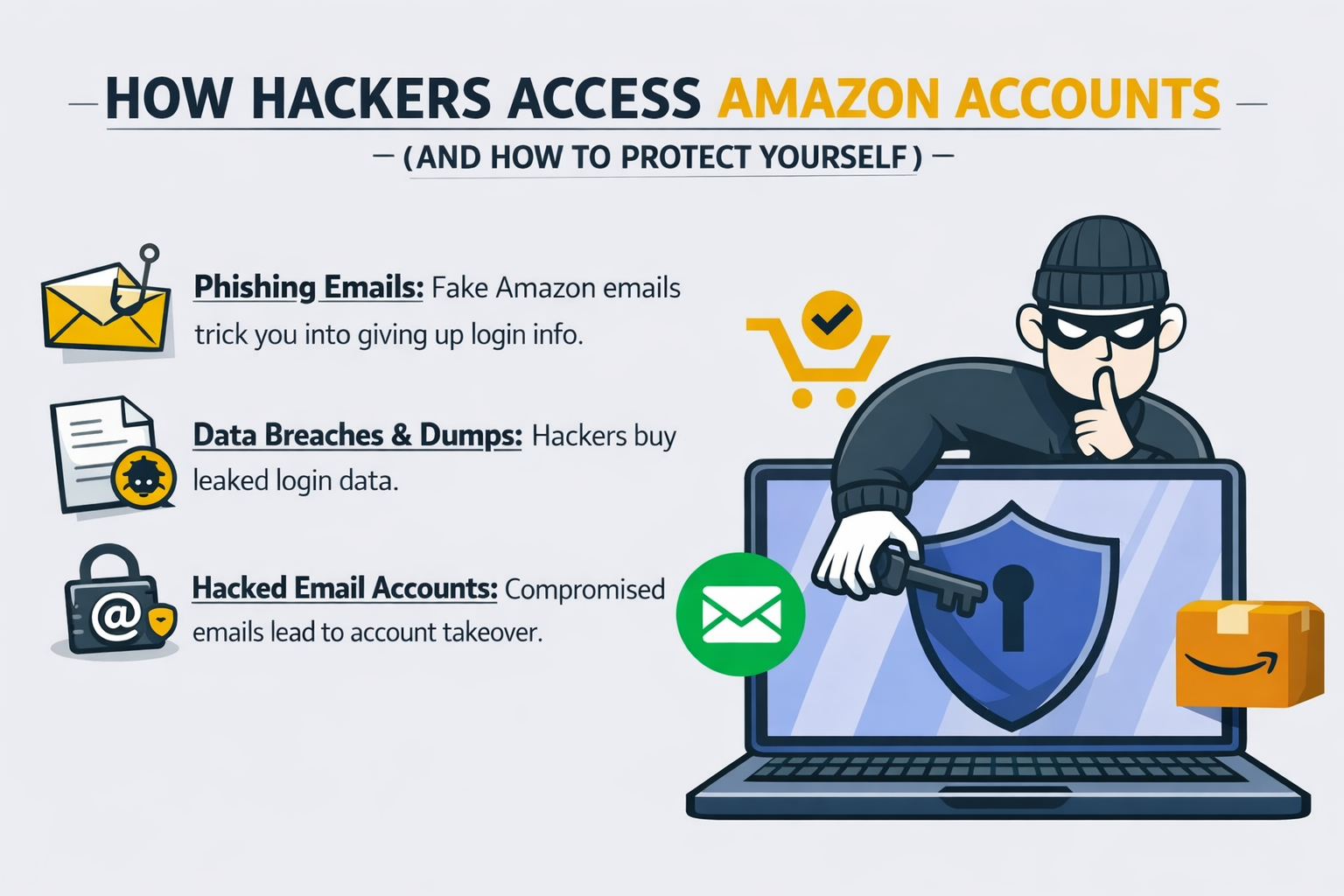
His business email had been hacked.
Unauthorized individuals gained access.
He completely lost control of the original account.
The compromised account was later deactivated.
This created the connection that triggered the new suspension.
Rejection of Self-Submitted Appeals
Unlike many related account cases, this seller had substantial documentation:
• Official police report confirming account theft
• Timeline of unauthorized access
• Email compromise records
• Identity verification documents
• Proof of loss of access
Before contacting us, the seller had already submitted multiple appeals to Amazon explaining the situation and attaching this evidence.
Every appeal was rejected.
Investigation
After reviewing David’s case history, our first objective was to identify why Amazon’s system continued to associate his active account with the previously deactivated and compromised account.
We began by reconstructing the full timeline:
• Date of the original account creation
• Date of the email compromise
• Period of unauthorized access
• Deactivation date of the stolen account
• Creation and operational history of the current account
This timeline allowed us to clearly separate control periods — before, during, and after the compromise.
Our analysis confirmed that the connection between the two accounts was ownership-based, not operational overlap. The seller had originally created both accounts, but the older account had been compromised and later deactivated while under unauthorized control.
However, Amazon’s enforcement systems do not automatically distinguish between:
• Intentional multi-account violations
• Operational linkage
• Historical ownership followed by theft
From a system perspective, both accounts were still associated with the same individual.
Appeal Pattern Analysis
We then reviewed David’s previously submitted appeals.
Key findings:
• Appeals lacked structured POA formatting
• Evidence was attached but not properly referenced
• Police documentation was included without contextual explanation
• The narrative did not clearly separate the period of control from the period of compromise
Most importantly, response times indicated automated rejection filtering rather than meaningful review.
This suggested that the issue was not insufficient documentation, but lack of structured presentation aligned with Amazon’s compliance review standards.
Reinstatement Strategy
Our strategic shift focused on reframing the issue from:
“Two related accounts, one deactivated”
to
“Verified account theft with documented loss of control, followed by unrelated active operations.”
This distinction is critical in Amazon related account reinstatement cases.
Without clear narrative separation, enforcement systems default to risk linkage.
The investigation phase concluded with a structured compliance roadmap:
Reformat the appeal into a formal Plan of Action
Clarify control timeline
Consolidate and reference evidence properly
Align language directly with Amazon’s Related Accounts Policy
Monitor response timing to assess review depth
Only after completing this structured investigation did we proceed to the next phase of the reinstatement process.
Phase 1: Appeal Reconstruction
We did not begin by escalating. We began by restructuring.
The seller’s original appeals were written as general explanations with attached documents.
We rewrote the submission in structured Plan of Action (POA) format aligned with Amazon compliance expectations:
Root Cause
Corrective Actions
Preventive Measures
This structure is critical in amazon seller account reinstatement cases.

Root Cause
In the root cause section, we clarified that the related account had originally belonged to the seller but was later compromised due to email hacking. He permanently lost control, and the account was deactivated while under unauthorized access. The appeal referenced the police report, case number, documented timeline of compromise, and a formal statement confirming loss of control. The tone remained factual and policy-focused.
Corrective & Preventive Measures
We documented:
• Credential resets and email replacement
• Multi-factor authentication
• Device separation
• Access restrictions
• Ongoing security monitoring
Amazon expects risk mitigation, even in theft cases.
Evidence Consolidation
We reorganized all documentation into a structured evidence pack:
• Highlighted police report
• Chronological timeline
• Identity verification
• Written affidavit confirming loss of control
Each document was clearly referenced inside the appeal.
We submitted three appeals under the revised structure. All three were rejected.
This can occur because, in amazon related account suspension cases, frontline Seller Performance teams often rely on existing risk flags within the system. Even when theft is documented, historical ownership links may continue to trigger enforcement, and reviewers may not have authority to override those system connections.
At this point, structured appeals alone were insufficient. Escalation became necessary.
Phase 2: Better Business Bureau (BBB) Escalation
After exhausting standard Seller Performance channels, we initiated formal escalation through the Better Business Bureau (BBB).
The complaint focused on:
Verified account theft
Documented police confirmation
Evidence previously ignored
Impact of automated review limitations
Request for senior compliance review
The tone remained factual and procedural. Escalation is not confrontation — it is procedural redirection.
After the first BBB submission, communication patterns changed. Amazon acknowledged the complaint reference, responses became more specific, and review timelines extended — indicating deeper case handling.
Approximately two weeks later, we submitted a second BBB letter reinforcing the documented theft, identity verification, clarified timeline, implemented risk mitigation measures, and a renewed request for manual senior review.
Persistence is often necessary in complex Amazon related account suspension cases.
The Result
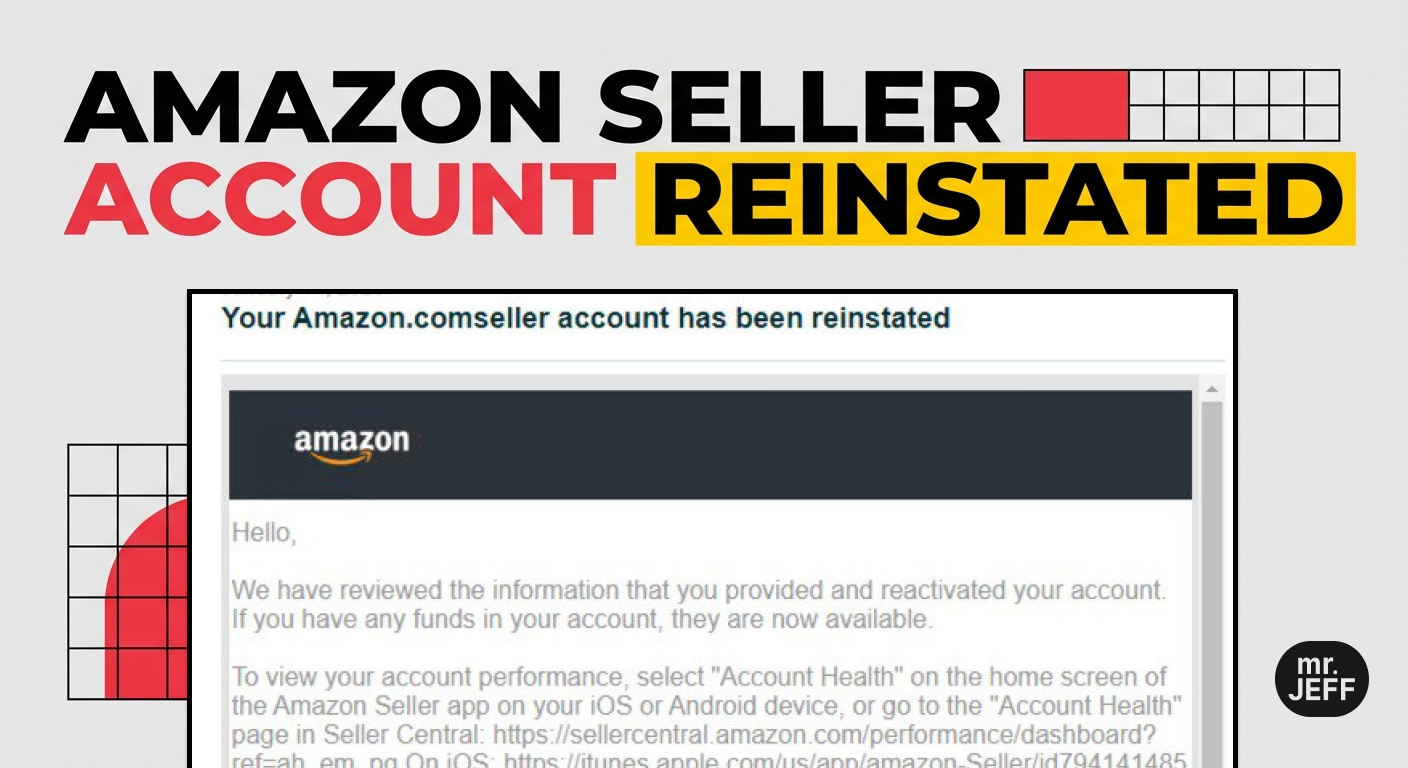
Following the second BBB submission, Amazon reinstated the account.
There was no detailed explanation of internal review mechanics. However, the pattern strongly indicated escalation to senior compliance review.
The final notice confirmed:
Amazon seller account reinstated
Selling privileges restored
Listings reactivated
Account Health reinstated
Total resolution time: 6 weeks.
Client Review
After reinstatement, the client shared his experience publicly on Trustpilot:

Amazon Seller Account Suspended?
Avoid unnecessary appeal rejections. Get qualified, policy-aligned assistance from specialists who understand how Amazon evaluates cases internally.
At Mr. Jeff AMZ, we specialize in reinstating suspended Amazon seller accounts — including complex related account, inauthentic, and high-risk compliance cases. Our team has successfully helped 600+ sellers restore their accounts and resume operations.
• Insider Expertise: Our specialists include former Amazon staff and experienced sellers who understand how Seller Performance reviews appeals behind the scenes.
• Custom Plans — No Templates: Every Plan of Action (POA) is written from scratch and tailored to your specific suspension type, account history, and risk profile.
• Unlimited Revisions: We continue refining your case until reinstatement, with no revision limits and no hidden fees.
• Dedicated 1-on-1 Support: You work directly with a personal reinstatement strategist who guides you through each stage of the process.
• Fast-Track for Urgent Cases: If your business is paused and time is critical, we offer priority handling to accelerate the reinstatement process.
• Honest Case Review: If reinstatement is not realistically achievable, we will tell you upfront. No false promises. No unnecessary costs.
Get Expert Suspension Analysis in 2 Minutes
Not sure where to begin your appeal or which strategy gives you the best chance of reinstatement?
Simply upload your Amazon deactivation notice into Ban Decoder and get a full expert case analysis in just 2 minutes.
Expert Policy Analysis
Success Probability Calculation
Instant Reinstatement Strategy Report
No guessing. No generic advice.
Just a clear, data-driven plan to move forward with confidence.

Author
Rick
Senior Reinstatement Consultant at Mr. Jeff AMZ
Rick is a Senior Reinstatement Consultant at Mr. Jeff AMZ with 6 years of experience appealing Amazon suspensions. He specializes in solving complex Amazon issues like Section 3, IP, and review-related enforcement, helping sellers recover deactivated accounts. His superpower is knowing Amazon's policies better than most Amazon reviewers do and building a compelling, watertight case for any position.
Connect on LinkedInFrequently Asked Questions
What is Amazon's Related Accounts Policy and why does it result in suspensions?
Amazon's Related Accounts Policy prohibits sellers from operating multiple accounts without permission. The system automatically suspends accounts when it detects connections like shared IP addresses, overlapping business addresses, linked bank accounts, or common operational data. If one account has been deactivated, any related accounts are immediately suspended to prevent policy circumvention.
Can I get my Amazon account reinstated if it was suspended due to a stolen or hacked related account?
Yes, reinstatement is possible but requires substantial documentation and often professional assistance. You'll need evidence like police reports, timeline of unauthorized access, email compromise records, and identity verification documents. As shown in this case, self-submitted appeals are frequently rejected, and strategic escalation may be necessary.
Why do Amazon appeals get auto-rejected even with proper documentation?
Amazon's initial review process is largely automated and may not properly evaluate complex situations involving account theft or fraud. The system often rejects appeals without human review, especially when dealing with related account suspensions. Professional appeal services understand how to structure appeals and escalate cases to get proper human review from Seller Performance teams.
What happens to my inventory and funds when my account is suspended?
When suspended under the Related Accounts Policy, selling privileges are immediately removed, listings are suppressed, and disbursements are paused. Your Account Health drops to zero and inventory access is restricted, meaning you cannot create removal orders or access your FBA inventory until the account is reinstated.
How long does the Amazon account reinstatement process typically take?
The timeline varies significantly based on case complexity and Amazon's response times. Simple cases might resolve in days, while complex situations involving stolen accounts can take weeks or months. Multiple appeals and escalations are often required, as demonstrated in this case where initial self-submitted appeals were rejected before professional intervention achieved reinstatement.
What documentation do I need to prove my account was stolen or compromised?
Essential documentation includes:
- Official police report confirming account theft
- Timeline showing when unauthorized access occurred
- Email compromise records from your email provider
- Identity verification documents
- Proof showing loss of account access
Should I try to appeal a related account suspension myself or hire a professional service?
While you can attempt self-appeals, this case study shows that even with proper documentation, self-submitted appeals often fail. Professional services understand Amazon's internal processes, know how to structure appeals effectively, and can escalate cases strategically when initial attempts are rejected. For complex cases involving stolen accounts, professional assistance significantly increases your chances of reinstatement.