
Amazon Tips
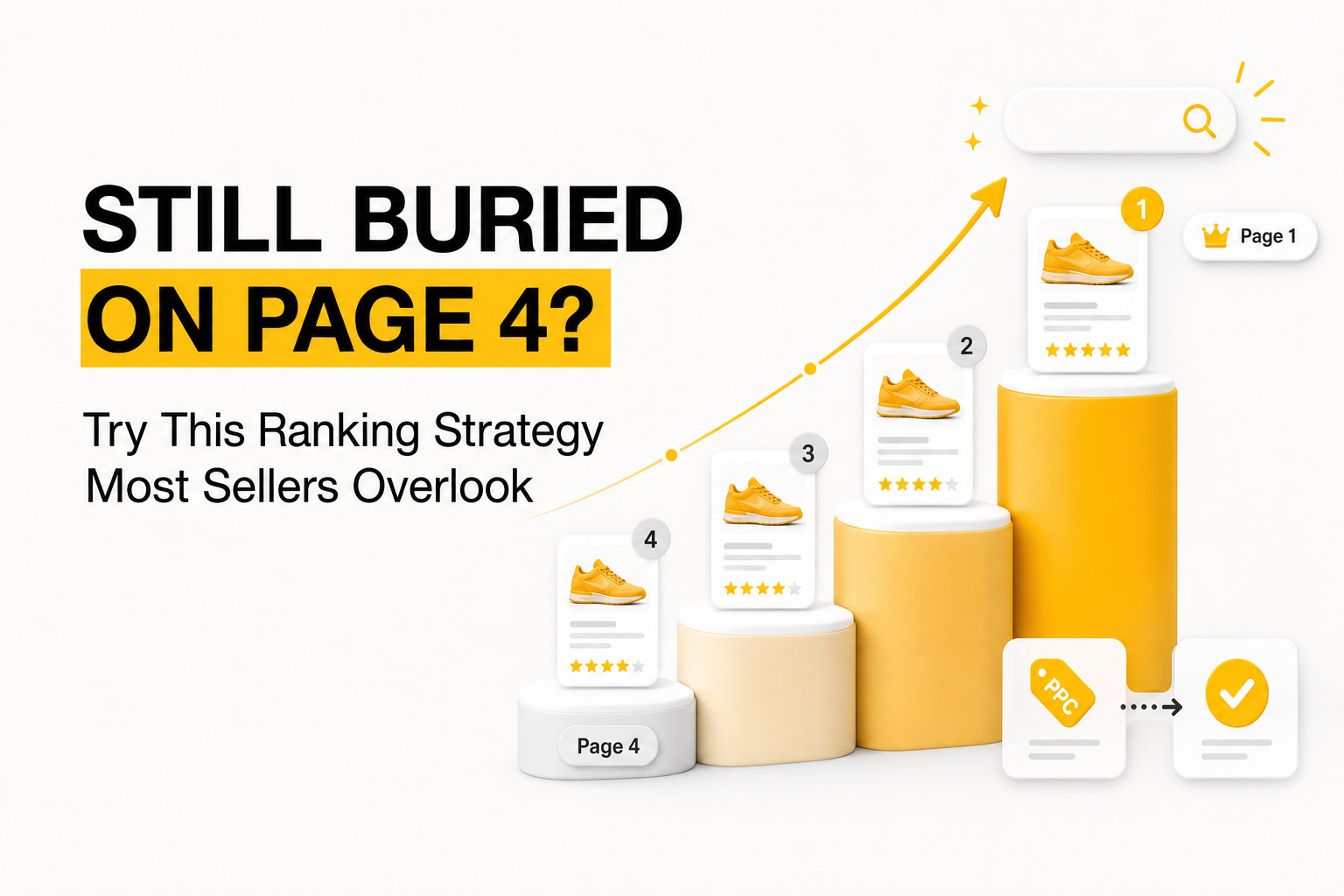
Still Buried on Page 4? Try This Ranking Strategy Most Sellers Overlook
September 2, 2026
Key Takeaways
- Amazon ranks products higher when sales come from organic searches rather than PPC ads because organic purchases signal genuine demand for specific keywords.
- Product Testing Campaigns use real shoppers who search target keywords, purchase on Amazon, and provide feedback to boost organic rankings for those terms.
- The most effective Product Testing Campaigns target keywords with over 5 conversions, above 10% conversion rate in PPC, but poor organic rankings like position 87.
- A beauty product ranking between positions 80-100 reached position 2 within one week using a Product Testing Campaign built on proven PPC keyword data.
- Your PPC Search Term Report reveals which keywords actually convert for your product, making them the best targets for building organic ranking momentum.
You're running PPC campaigns, getting traffic, and making sales.
And yet, there you are, stuck on page 4 for the keyword that matters most to your business.
If that sounds familiar, the problem probably isn't your ad spend or your bids.
The problem is that most sellers use PPC for one thing: driving paid traffic. And while that's valuable, it's only half of what your advertising data is capable of doing for you.
Your PPC campaigns are generating something far more useful than sales: proof. Proof of which keywords real shoppers actually use. Proof of which search terms convert. Proof of exactly where your product has the potential to compete organically.
This guide explains how to turn that proof into organic visibility, using a strategy that most sellers running PPC have never considered.
Why PPC Alone Can't Get You to Page 1
Before getting into the solution, it's worth understanding why this problem exists in the first place.
Amazon's A9 algorithm doesn't just track whether your product is selling. It tracks where those sales are coming from. A sale generated from a sponsored ad placement tells Amazon your product can convert paid traffic. But a sale that happens because a shopper found your product independently—without you paying for that specific click—sends a fundamentally different message.
That second type of sale tells Amazon that this product has organic demand.
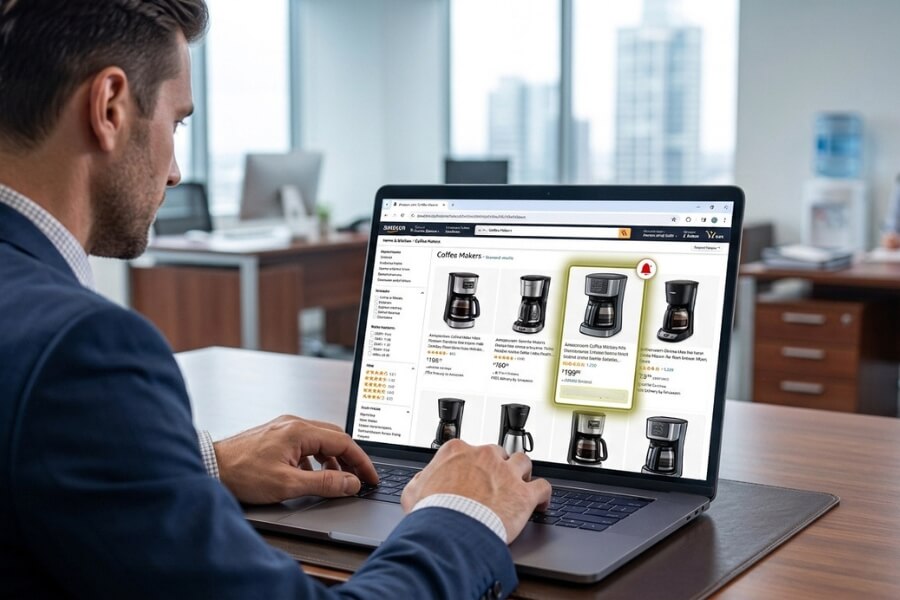
The more consistently Amazon sees that signal associated with a specific keyword, the more confidently it ranks your product for that term. And that's the core limitation of PPC-only strategies: even perfectly optimized paid campaigns generate mostly the first type of signal. They contribute to overall sales velocity, but they don't build the keyword-specific organic demand signal that moves products from page 4 to page 1.
This is the gap that Product Testing Campaigns are built to close.
What Are Product Testing Campaigns?
In the U.S., there's a well-established service built around mystery shopping. Brands pay someone to experience their store and give honest feedback, which the company then uses to sharpen its strategy.
Product Testing Campaigns work on the same principle, just built for Amazon.
A tester is essentially a mystery customer, except the "store" is your listing. Real shoppers—selected because they match your target audience—discover your product through targeted external traffic, purchase it directly on Amazon using specific keywords, use the product, and then provide structured feedback through a survey.
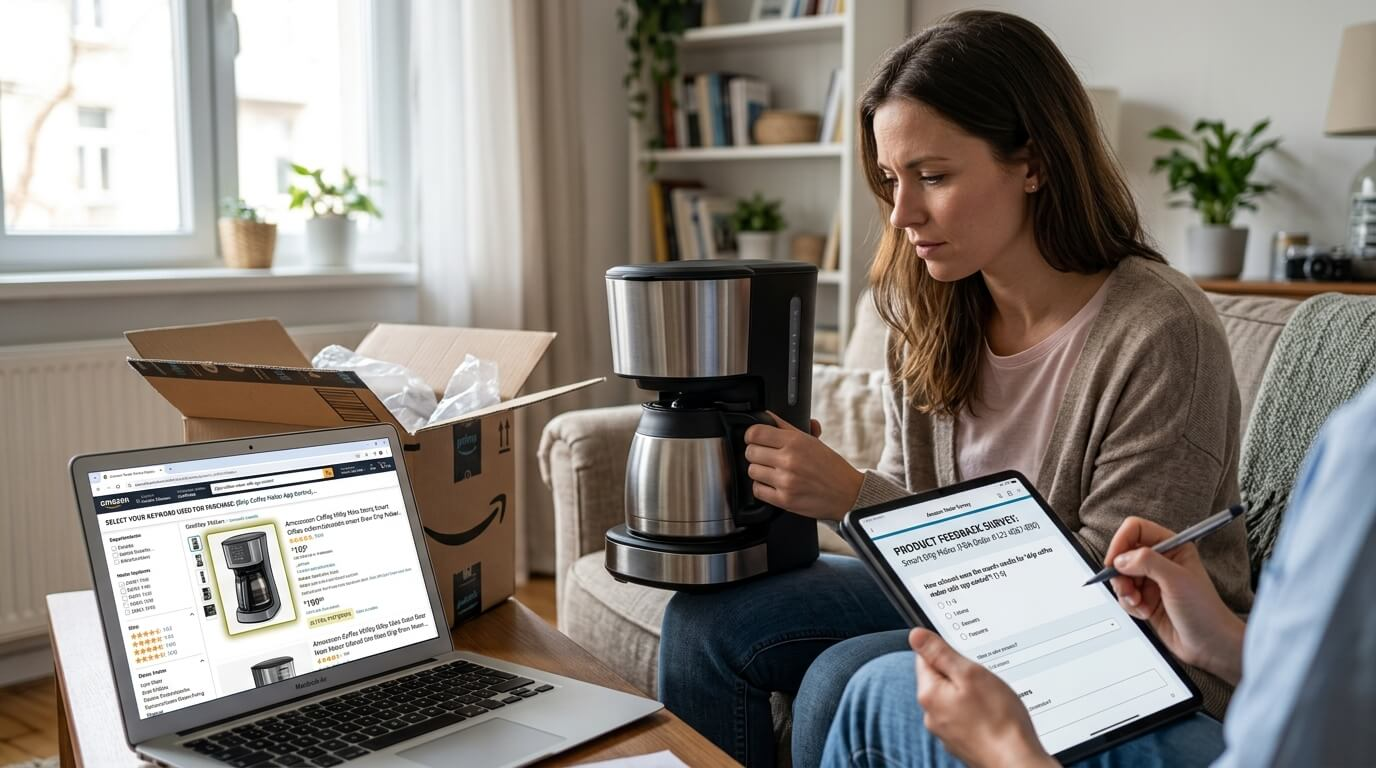
As a seller, it's almost impossible to evaluate your own product without bias. You know the story behind it, the work that went into it, the reasons you're proud of it. That closeness distorts how you judge it. Feedback from people with no attachment to it tells you how the product is actually landing—and how well it fits your target customer.
And it goes beyond the product itself. Testers can also evaluate your listing: image quality, title clarity, pricing perception, bullet point effectiveness, overall shopping experience, etc.
How To Run a Product Testing Campaign By Yourself
1. Configure the campaign — set your ASIN, target keywords, purchase volume, custom survey questions, and pricing
2. Targeted social media launch — campaigns run through targeted social ads reaching real shoppers already in your product's niche, driving external traffic to your listing
3. Real tester purchases — shoppers discover your product through that external traffic and complete the purchase on Amazon themselves
4. Structured survey feedback — every tester fills out a survey covering standard product questions and any custom questions you add
5. Improved keyword rankings — as Amazon recognizes the sales momentum associated with your target keywords, your organic position starts to climb
Why This Strategy Works Best When Built on PPC Data
Here's where the strategy gets genuinely powerful—and where most sellers who've heard of product testing leave significant results on the table.
Most sellers who run Product Testing Campaigns choose target keywords based on search volume or intuition. They pick terms that seem relevant, or that keyword research tools suggest are popular, and build their campaigns around those.
The sellers who get significantly better results do something different: they use their PPC Search Term Report to tell them which keywords to target.
Your Search Term Report represents months of proof about actual shopper behavior—which search terms real customers used to find your product, which ones generated clicks, which ones converted into purchases.
And when you build a Product Testing Campaign around keywords that PPC has already proven convert for your specific product, you're not hoping a keyword might perform. You already know it will. You're simply giving Amazon more reasons — from more traffic sources to associate your product with that term.
A Practical Framework For Using PPC Data to Identify Your Best Opportunities
Not every keyword deserves a Product Testing Campaign. The ones that do share a specific combination of characteristics you can identify directly from your advertising data.
Step 1: Identify your consistently converting keywords
Pull your Search Term Report for the past 60 days and sort by conversion rate. Look for keywords with:
5 or more conversions
Conversion rate above 10%
ACoS at or below your target threshold
Step 2: Check organic rankings for those keywords
For each proven keyword, check your current organic ranking. You're looking for a specific pattern:
Strong PPC conversion + weak organic position = high-priority opportunity
A keyword you're converting at 14% through paid ads but ranking organically at position 87 represents exactly the kind of gap a Product Testing Campaign can close.
Compare these two scenarios:
Keyword A: "organic face moisturizer"
PPC conversion rate: Strong
Relevance: High
Current organic ranking: #87 → High priority opportunity
Keyword B: "face moisturizer"
PPC conversion rate: Weak
Relevance: Moderate
Current organic ranking: #18 → Low priority — weak conversion evidence and already ranking reasonably well
Focus your attention on keywords like Keyword A: proven conversion, high relevance, significant organic ranking gap.
Step 3: Prioritize by profitability and competition
Before committing to a Product Testing Campaign, filter your opportunities one more time:
Is the keyword profitable enough to warrant investment?
How strong is the competition for this term? A highly competitive keyword may require more volume to move the needle.
Is your listing currently optimized to convert the additional traffic? If the listing has a conversion problem, fix that first. Sending more traffic to a weak listing wastes the campaign.
Step 4: Build your campaign around validated opportunities
Once you've identified 2-3 keywords that meet the criteria above, structure your Product Testing Campaign around those specific terms. Each tester searches for your product using the exact target keyword, browses the search results naturally, finds your listing, and purchases.
This is the mechanism: the sale registers as an organic, keyword-matched purchase. Amazon sees consistent sales velocity for that specific search term. Your organic ranking for that keyword improves.
Case Study: What This Looks Like in Practice
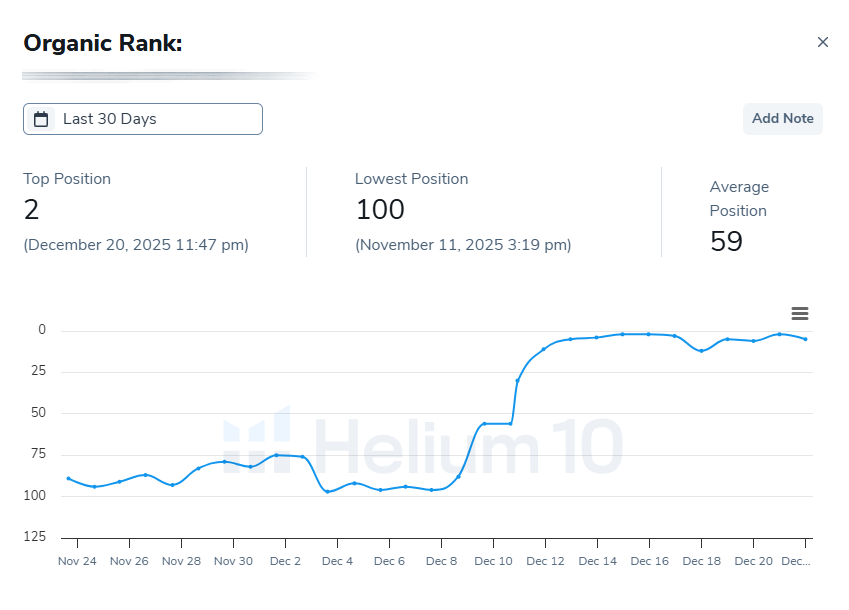
One of intelliRANK’s customers from the beauty category had a product that was ranking in the 80–100 range. After a focused Product Testing Campaign built around keywords with proven PPC conversion data, it reached position #2 within a single week.
Ready to Put This Strategy to Work for Your Brand?
You can try and apply this strategy on your own to gain more visibility for your product, or if you have enough on your plate and want to delegate it to a team of experts, intelliRANK can help.
intelliRANK's Product Testing Campaign service handles the full process—from campaign configuration and targeted social promotion to tester coordination, survey collection, and ranking monitoring—so you can focus on what happens when your product reaches page 1.
If you're running PPC and still stuck on page 4, the data to change that is probably already sitting in your advertising account. You just need to know what to do with it.
👉 Check out intelliRANK's Product Testing Campaign services!

Author
Helen
Head of Client Success at Mr. Jeff AMZ
Helen leads Sales & Client Success at Mr. Jeff AMZ, guiding Amazon sellers from their first suspension panic to a fully recovered account. With years of frontline experience managing reinstatement cases, she translates Amazon's dense policy language into clear, actionable next steps and keeps sellers informed at every stage of the appeal.
Connect on LinkedInFrequently Asked Questions
Why isn't my PPC spending helping me rank organically on Amazon?
Amazon's A9 algorithm distinguishes between paid traffic sales and organic demand signals. While PPC drives paid conversions, it doesn't build the keyword-specific organic demand signal that Amazon needs to move your product from page 4 to page 1. Your ads prove you can convert paid clicks, but not that shoppers are independently seeking your product.
What is a Product Testing Campaign and how does it work?
A Product Testing Campaign uses real shoppers who match your target audience to discover your product through external traffic, search for it using specific keywords on Amazon, and make a purchase. These testers then use the product and provide structured feedback through surveys. Think of it as mystery shopping, but designed specifically for Amazon sellers.
How do Product Testing Campaigns help improve organic rankings?
Unlike PPC sales, purchases from Product Testing Campaigns send Amazon a different signal—one that indicates organic demand for specific keywords. When Amazon consistently sees shoppers finding and purchasing your product through targeted keyword searches, it builds confidence in ranking your product higher for those terms organically.
How can I use my existing PPC data to improve my organic ranking strategy?
Your PPC campaigns are already generating valuable proof of which keywords convert. Use your search term reports to identify:
- Keywords with high conversion rates
- Search terms real shoppers actually use
- Terms where your product has competitive potential
These insights can then guide your Product Testing Campaigns to focus on the most promising keywords.
What kind of feedback do testers provide beyond just making a purchase?
Testers evaluate your entire customer experience, including product quality, listing effectiveness (image quality, title clarity, and pricing perception), and overall fit for your target market. This unbiased feedback helps you identify blind spots you can't see because you're too close to your own product.
Who are the testers in Product Testing Campaigns and how are they selected?
Testers are real shoppers specifically selected because they match your target audience demographics and interests. They're not random participants—they represent the actual customers you're trying to reach, which makes both their purchases and their feedback more valuable and relevant to your business.
Is this strategy effective for sellers already running successful PPC campaigns?
Yes, especially for those sellers. If you're already running PPC and making sales but still stuck on page 4, you have proven keyword data ready to leverage. Product Testing Campaigns help you convert that paid traffic proof into the organic demand signals Amazon needs to rank you higher—filling the gap that PPC alone cannot close.