
Amazon Tips
Amazon Account Suspended? What to Do in the First 48 Hours
March 18, 2026

Key Takeaways
- Amazon may deny appeals if sellers do not respond within 48 hours when additional information is requested after an initial suspension appeal.
- Mr. Jeff AMZ's analysis of over 600 reinstatement cases shows sellers who identify the real root cause before appealing usually recover faster than those submitting rushed appeals.
- Amazon requires suspension appeals to include three specific elements: root cause analysis, corrective measures already taken, and preventative steps to avoid repeat violations.
- Submitting multiple inconsistent appeals or using generic templates from different suspension types often creates a messy case history that makes reinstatement harder.
- The Suspension Analyzer tool by Mr. Jeff AMZ uses data from 600+ reinstated accounts to help sellers identify suspension triggers and build case-specific action plans.
When an Amazon account gets suspended, panic is a completely normal reaction.
Sales can stop overnight. Your listings may go inactive. Team members start asking questions. Cash flow suddenly feels uncertain. And every hour that passes feels expensive.
What many sellers do not realize is that the first 48 hours after an Amazon suspension often shape the entire reinstatement timeline.
This is the window where sellers either build a strong, credible reinstatement case or accidentally make recovery harder. Amazon routes account and listing appeals through Account Health, and Amazon’s own Seller Central guidance shows that response windows matter. In one Seller Central discussion, Amazon notes that if additional information is requested after an appeal, sellers should respond within 48 hours or the appeal may be denied.
For official guidelines, refer to Amazon Plan of Action guidelines and Amazon Account Health.
That is why the first 48 hours are not about “sending something fast”. They are about making the right moves in the right order.
At Mr. Jeff AMZ, we have seen this pattern repeatedly across Amazon account reinstatement cases. Sellers who slow down just enough to understand the real issue usually recover faster than sellers who submit rushed, emotional, or generic appeals. Over the last 5 years, our team has worked on 600+ reinstatement cases, and one of the clearest lessons is this: the first appeal often sets the tone for everything that follows.
So if your Amazon account is suspended, the goal is to understand the exact enforcement, identify the real issue, fix what can be fixed immediately, gather the right evidence, and submit an appeal that Amazon can trust.
This article explains exactly how to do that.
Why the First 48 Hours Matter More Than Most Sellers Think
An Amazon suspension is not just a technical event. It is a compliance review.
Amazon is not asking, “How upset is this seller?” Amazon is asking, “Do we understand what went wrong, and do we believe this seller has fixed it in a way that protects customers and the marketplace?” That is a very different question.
In the first 48 hours, Amazon wants clarity. It wants consistency. It wants evidence. And it wants to see that the seller understands the actual policy risk behind the suspension.
This is where many sellers lose valuable time. They focus on proving that the suspension feels unfair instead of proving that the issue has been identified, corrected, and prevented from happening again.
That is also why copy-paste POA templates rarely work. Amazon Seller Central guidance and moderator-led forum responses consistently push sellers toward a structured Plan of Action built around root cause, corrective actions, and preventive measures, supported by specifics rather than vague promises.
In other words, Amazon does not want a dramatic explanation. It wants an operational explanation.
At Mr. Jeff AMZ, we have seen this repeatedly in amazon seller account reinstatement work. Sellers usually do not lose weeks because they cared too little. They lose weeks because they moved too fast in the wrong direction.
What Not to Do in the First 48 Hours
This is where many sellers damage their case without realizing it.
Do not submit a rushed appeal
This is probably the most common mistake.
A fast appeal feels productive. But if the appeal misidentifies the root cause, contradicts Amazon’s notification, or promises actions you did not actually take, it can push the account into a rejection loop.
Once your appeal history becomes messy, every later submission has to work harder.
Do not contradict Amazon’s stated reason without a strategy
Many sellers immediately start arguing with Amazon’s notification. They write things like “this makes no sense,” “we did nothing wrong,” or “Amazon made a mistake.” Even if the enforcement seems unfair, that tone usually does not help. Amazon wants to see that the seller understands the risk it identified and has addressed it directly.
Do not reuse an old template from a different suspension type
A generic Amazon appeal letter is not a reinstatement strategy. A POA that once helped with a late shipment warning will not solve an inauthentic complaint, a related accounts issue, a Section 3 suspension, or an IP complaint. Different suspension types require different evidence, different language, and different corrective actions.
Do not open multiple cases hoping for a different answer
This is one of the fastest ways to create a messy case history. Sellers sometimes think more tickets mean more chances. In reality, multiple inconsistent submissions can make the account look disorganized and untrustworthy.
Do not rely on an AI-written appeal
This has become a major issue. Sellers paste the suspension notice into an AI tool, get back a polished-sounding appeal, and submit it without checking whether it actually matches the enforcement, the documents, or the operational facts. The result is often a generic response that sounds nice but solves the wrong problem.
Why Slowing Down Slightly Can Speed Things Up
This is the part many sellers misunderstand.
When a seller hears “you should slow down,” they often assume that means waiting passively. That is not what we mean. Slowing down slightly means resisting the urge to submit the first emotional draft and instead using the first 24 to 48 hours to build a clean, credible, evidence-based case.
That short pause can dramatically improve the quality of the appeal.
Amazon moderators repeatedly point sellers toward a Plan of Action built around three specific pillars: root cause, corrective measures, and preventative steps. In other words, Amazon is not asking for a quick emotional defense. It is asking for a structured explanation of what went wrong, what you fixed, and what now prevents repeat violations.
This is exactly why a slightly slower start can create a faster reinstatement path.
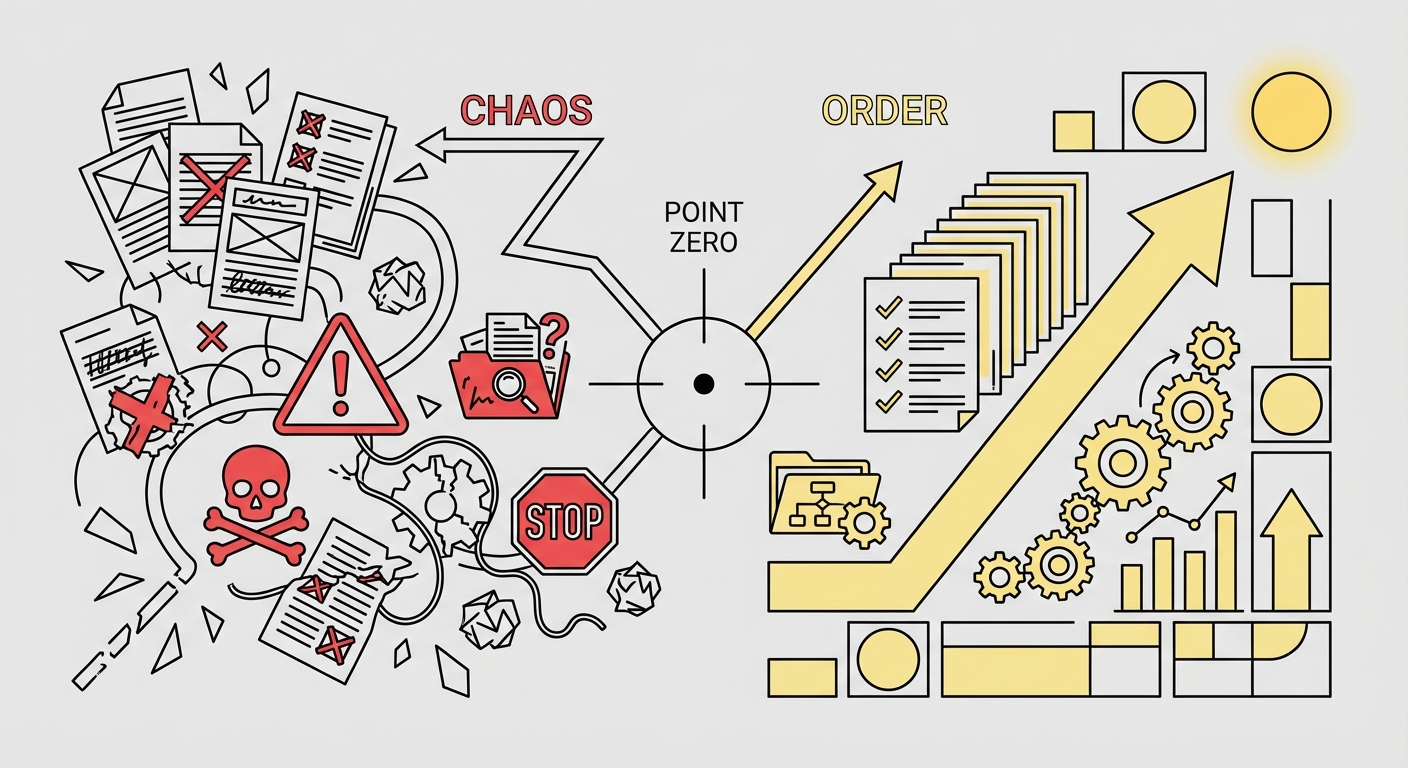
Action Plan After Amazon Account Suspension
Below, we outline a universal action plan for any Amazon seller facing an account suspension. While every case has its own specifics, these are the core steps that should be taken first to build a strong reinstatement strategy.
1. Understand What Type of Suspension You Are Dealing With
Before writing anything, classify the case correctly.
This is step one because the strategy for reinstating an Amazon seller account depends on the exact enforcement type. A Section 3 suspension is not handled the same way as an inauthentic claim. A related accounts suspension is different from a dropshipping violation. An intellectual property complaint is different from a document verification failure.
Read the performance notification carefully and answer these questions:
Is this account-level or listing-level enforcement?
What exact policy did Amazon mention?
Did Amazon request specific documents?
Did Amazon mention a timeline or deadline?
Have there been earlier warnings tied to the same issue?
This part matters more than most sellers think. If you misclassify the case, everything that follows gets weaker. Your appeal may sound intelligent, but if it solves the wrong problem, Amazon will reject it anyway.
Amazon also makes clear that account-level and listing-level appeals follow specific channels inside Account Health. Sellers are directed to use the Reactivate your account button for account actions and the appropriate product policy or IP complaint workflow for listing actions.
So before you ask how to reinstate an Amazon account, first ask a more important question: what exactly is Amazon asking me to fix?
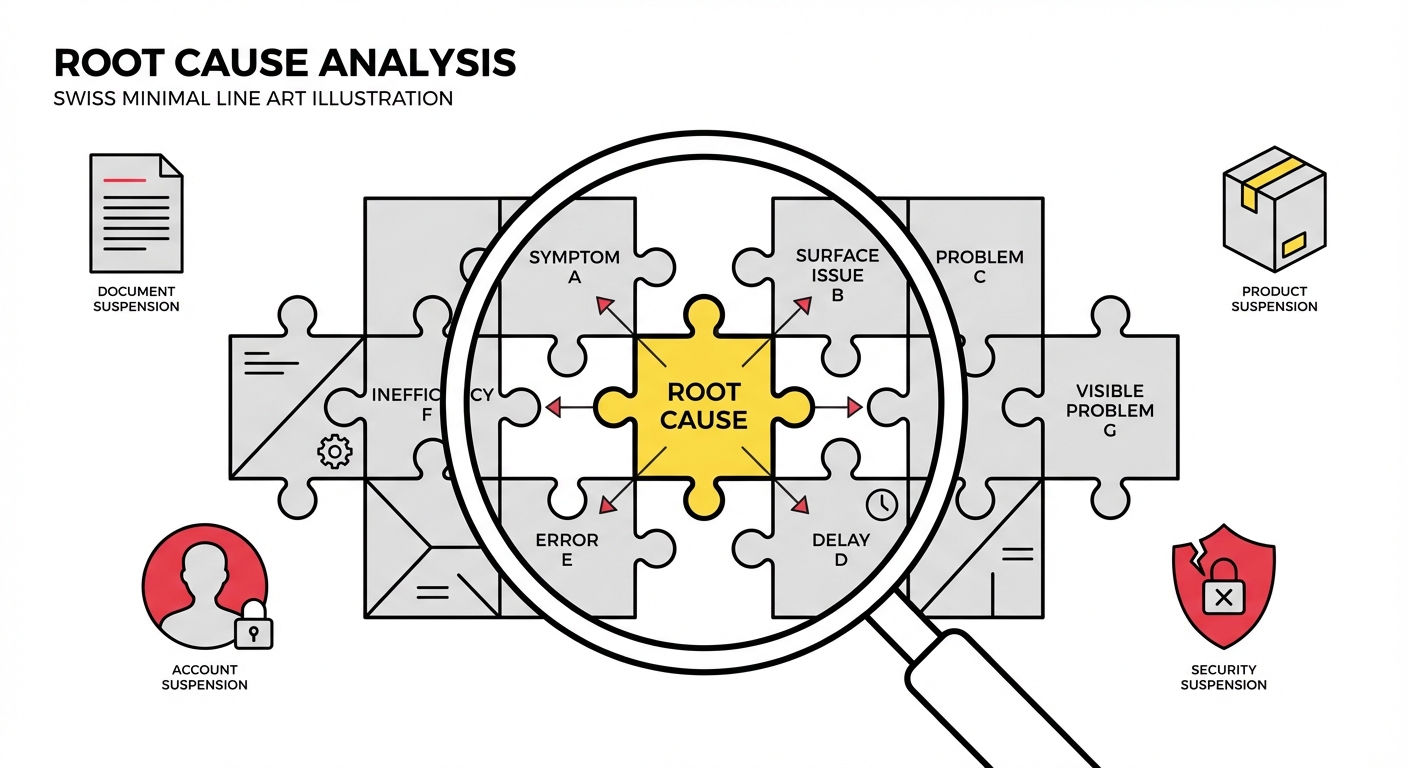
2. Identify the Real Root Cause
Identifying the real root cause is the most critical step in the entire Amazon account reinstatement process.
Amazon does not suspend accounts randomly — every enforcement is tied to a specific risk signal. But the key challenge is that Amazon’s notification often highlights the symptom, not the actual underlying issue. If you address only what is written on the surface, your appeal may look correct but still get rejected because it does not solve the real problem.
That is why root cause analysis is not just a formality — it directly determines whether your appeal will be accepted or denied.
If the root cause is wrong or too generic:
Your corrective actions will not match the issue
Your preventive measures will look weak or irrelevant
Your appeal will feel inconsistent to the reviewer
And once that happens, the case often falls into a rejection loop that becomes harder to fix with each new submission.
🔸 How to Identify the Root Cause Correctly
To identify the root cause, you need to analyze the case beyond the suspension message:
Review all recent performance notifications
Check past warnings or related issues
Analyze your sourcing, listing, and fulfillment processes
Look for inconsistencies between your operations and Amazon’s policies
Identify where internal controls failed or were missing
This process should feel like an internal audit, not a quick explanation.
🔸 Use Suspension Analyzer to Identify the Root Cause Faster
To help sellers identify the real root cause faster and avoid unnecessary appeal rejections, the team at Mr. Jeff AMZ developed the Suspension Analyzer.
Suspension Analyzer by Mr. Jeff AMZ is an innovative AI-powered tool that allows you to upload your Amazon performance notification and get a clear, structured breakdown of your suspension.
Instead of guessing what went wrong, you receive:
A precise explanation of the likely trigger behind the suspension
An evaluation of case complexity and reinstatement difficulty
A step-by-step action plan tailored to your situation
The tool is built on insights from 600+ successfully reinstated Amazon seller accounts, making it aligned with real-world enforcement patterns — not theory.
It also helps you:
Break down your Performance Notification language
Identify the likely trigger category (inauthentic, IP, related accounts, performance, verification, etc.)
Clarify what Amazon actually expects from your appeal
Provide a strategy aligned with Amazon’s internal review logic
Outline the exact documentation checklist you’ll need
👉 Try Suspension Analyzer by Mr. Jeff AMZ
3. Corrective Action — Fixing the Problem
Once the real cause is clear, you need to show what you already did to correct it.
This is where many sellers lose credibility. They write appeals full of future promises but show very little immediate action.
Corrective actions should be concrete and case-specific. Depending on the suspension type, that may include:
removing affected listings
recalling or quarantining inventory
ending a supplier relationship
rewriting listing content
changing account access permissions
adding role-based controls
updating shipping workflows
retraining staff
reviewing previous orders or documents for gaps
Amazon wants to see that the seller is not simply asking for another chance. It wants to see that the risk has already been addressed.
This is also why “please reactivate us and we promise to be more careful” is never enough. Amazon is looking for real operational correction.
4. Gather Evidence and Supporting Documents
The appeal is only as strong as the evidence behind it.
Once corrective action is underway, start collecting everything that may support the case. The exact document set depends on the suspension type, but common evidence may include:
supplier invoices
authorization letters
letters of explanation
utility bills
company registration documents
bank statements
tracking records
screenshots of updated workflows
revised SOPs
proof of listing changes
inventory removal confirmations
access control records
This step should be methodical. Create a clean folder structure. Label files clearly. Match every document to a claim in the appeal.
One of the biggest reasons Amazon suspension appeals fail is document mismatch. The seller uploads files, but the files do not clearly support the explanation. Or they submit documents without a narrative that connects them to the policy issue.
Evidence should never be random. It should be strategic.
5. Build the Appeal Package
Only now should you draft the appeal itself.
A strong Amazon account suspended? Get free instant analysis appeal package usually contains five elements:
1. A clear issue statement
Show that you understand the exact enforcement.
2. Root cause
Explain the operational failure behind the issue.
3. Corrective actions
Describe what you already changed.
4. Preventive measures
Show what system now exists to prevent recurrence.
5. Supporting evidence
Attach the documents that prove the explanation.
If you want Amazon to reinstate your seller account, your appeal package should make the reviewer think one thing: this seller understands the problem and has fixed the process behind it.
6. Submit the Appeal in Seller Central
Once the appeal package is complete, submit it through the correct channel.
Amazon instructs sellers to file account appeals through Account Health using the Reactivate your account button. If Amazon asks for additional information later, sellers should go back through View appeal and submit the requested materials there. For listing-level issues such as IP complaints or listing policy violations, Amazon directs sellers to the relevant section in Product Policy Compliance within Account Health.
This matters because even a strong appeal can be delayed if it is sent through the wrong path.
Do not attach unnecessary files. Do not add emotional commentary. Do not paste in three versions of the same explanation. Submit one focused case.
When Escalation Makes Sense
Escalation should not be the first move in every case.
First, the core appeal needs to be strong. Escalation cannot fix a weak root cause, missing evidence, or bad narrative. It only becomes useful when the underlying case is already solid and the normal review path is no longer moving.
Escalation usually makes sense when:
the appeal has been denied repeatedly with templated responses
the evidence is strong but not being meaningfully engaged
the case history is stuck in a loop
the issue is high-value, high-risk, or structurally complex
the seller needs a broader reinstatement strategy rather than another basic submission
The key point is this: escalation works best when it is part of a strategy, not a panic reaction.
Case Study:
An AI-Written Appeal Delayed This Seller’s Reinstatement for Months
👉 Full Case Review: How We Reinstated an Amazon Seller Account Suspended Under Section 3
In January 2026, a seller contacted Mr. Jeff AMZ after his account had been suspended under Section 3 for inauthentic concerns. Despite having strong evidence — valid invoices, an authorized distributor, and brand confirmation — he had already submitted 19 appeals over several months, all rejected with “Insufficient evidence” and “Unable to verify authenticity.”
The problem was not the documents — it was the strategy. All appeals were AI-generated and generic, failing to guide Amazon toward the key step: supplier verification.
We rebuilt the case from scratch and applied a structured 3-level approach:
Seller Central appeal with clear supplier verification request
Account Health escalation to move beyond automated responses
External escalation (BBB) to increase executive visibility
Shortly after escalation, Amazon completed the review and reinstated the account.
Key insight: Even strong evidence will not lead to reinstatement if your appeal is misaligned with how Amazon actually verifies cases.
A Practical First-48-Hours Checklist
If your Amazon account is suspended, use this order of operations:
Read every performance notification in full.
Identify whether the case is account-level or listing-level.
Determine the exact policy issue.
Stop any ongoing activity tied to the violation.
Preserve notifications, screenshots, and case IDs.
Build a timeline of what happened.
Identify the real root cause.
Take corrective action immediately.
Gather the supporting documents Amazon is likely to evaluate.
Draft one consistent appeal package.
Submit through the correct Seller Central channel.
Respond quickly if Amazon requests more information.
Why You Should Use Professional Amazon Account Reinstatement Help
Because Amazon reinstatement is not just a writing appeals. It is part compliance review, part evidence management, part risk analysis, and part strategy.
Most sellers only see the appeal form. An experienced Amazon appeal service sees the entire system around it:
what enforcement type is really in play
what Amazon is likely to question next
which documents strengthen the case
which documents weaken it
when to push forward
when to pause
when to escalate
how to keep the case history consistent
That is why sellers often turn to professional Amazon account reinstatement help after early DIY submissions fail.
At Mr. Jeff AMZ, the value is not just “we write an appeal.” The value is that we investigate the root cause, structure the case correctly, review the supporting documents, build a credible POA, and guide the seller through the reinstatement path with a strategy built for Amazon’s review logic.
For sellers dealing with a serious suspension, that difference can save a huge amount of time, stress, and wasted appeal attempts.
Why Sellers Choose Mr. Jeff AMZ
Sellers come to Mr. Jeff AMZ because they want more than a generic appeal draft.
They want a team that understands Amazon suspensions from the inside of the process — how they are reviewed, why they get rejected, and what actually gives a seller a stronger chance of reinstatement.
Here is what makes our approach different:
3-level escalation strategy
We do not rely on a single appeal submission. We use a structured escalation approach designed for complex or rejected cases.
Personal appeal manager
Each seller gets a personal appeal manager, which means better communication, clearer next steps, and a more organized reinstatement process.
5 years of Amazon reinstatement experience
We focus specifically on Amazon suspension and reinstatement work, which gives us a practical understanding of how different case types should be handled.
600+ reinstated accounts
Our experience is built on real outcomes across multiple suspension categories.
Deep Amazon compliance focus
At Mr. Jeff AMZ, we work with Amazon's platform logic, enforcement patterns, and compliance expectations every day. That allows us to guide sellers in a way that is highly specific to Amazon — not just generally legal.
Is Your Amazon Seller Account Deactivated?
Don’t waste time on repeated appeal rejections.
Get professional support from the Mr. Jeff AMZ team and return to selling faster.
Contact us for a Free Expert Consultation:
We will review your suspension case individually
Identify the real root cause
Provide a clear, structured reinstatement strategy

Author
Helen
Head of Client Success at Mr. Jeff AMZ
Helen leads Sales & Client Success at Mr. Jeff AMZ, guiding Amazon sellers from their first suspension panic to a fully recovered account. With years of frontline experience managing reinstatement cases, she translates Amazon's dense policy language into clear, actionable next steps and keeps sellers informed at every stage of the appeal.
Connect on LinkedInFrequently Asked Questions
What should I do immediately after my Amazon account gets suspended?
First, don't panic or submit a rushed appeal. Take time to carefully read the suspension notice to understand the exact enforcement action and policy violation. Focus on identifying the real issue behind the suspension rather than immediately defending yourself or claiming the suspension is unfair.
Why are the first 48 hours after suspension so critical?
The first 48 hours often determine whether you'll recover in days or stay suspended for months. Amazon may deny appeals if you don't respond to information requests within 48 hours. Additionally, your first appeal sets the tone for the entire reinstatement process, making it crucial to get it right from the start.
What's the biggest mistake sellers make when appealing a suspension?
The biggest mistake is focusing on proving the suspension feels unfair instead of demonstrating you've identified, corrected, and prevented the issue from recurring. Amazon wants an operational explanation, not an emotional one. Copy-paste templates and generic appeals rarely work because they don't address the specific compliance concerns.
What does Amazon actually want to see in a Plan of Action (POA)?
Amazon wants a structured POA that includes: 1) Root cause analysis of what went wrong, 2) Corrective actions you've already taken, and 3) Preventive measures to ensure it won't happen again. They want specific evidence and operational details, not vague promises or dramatic explanations.
Should I submit an appeal quickly to show I'm responsive?
No, speed without accuracy can hurt your case. While you need to act within 48 hours if Amazon requests information, rushing to submit an incomplete or emotional appeal often backfires. Take enough time to understand the real issue, gather evidence, and craft a comprehensive response that addresses Amazon's compliance concerns.
How do I identify the real issue behind my suspension?
Start by carefully reading your suspension notice and any performance notifications in Seller Central. Look beyond the immediate trigger to understand the underlying policy risk. Consider recent changes to your account, customer complaints, or operational issues that might have led to the suspension.
What evidence should I gather for my reinstatement appeal?
Gather documentation that proves you've addressed the issue, such as invoices, supplier agreements, process changes, training records, or system improvements. The evidence should directly support your corrective actions and preventive measures. Focus on concrete proof rather than promises or explanations.