
Amazon Tips
Amazon Seller Account Deactivated for “Item Not Received” Claims? How to Fix Order Defect Rate Issues and Reinstate Your Account
May 15, 2026
Key Takeaways
- Amazon deactivates seller accounts when Order Defect Rate exceeds 1 percent, meaning just 11 defects among 1,000 orders triggers suspension risk.
- Item Not Received claims filed by buyers directly impact Order Defect Rate and can result in account deactivation within 17 days or immediately.
- FBM sellers using Amazon Buy Shipping service receive INR claim protection where Amazon investigates and handles the claim instead of counting against ODR.
- Signature confirmation on orders above 100 to 250 dollars prevents fraudulent INR claims, which most commonly target items worth over 250 dollars.
- Deactivated accounts require a Plan of Action within 72 hours detailing root cause, corrective actions already taken, and preventative measures going forward.
What Is an "Item Not Received" (INR) Claim and Why Should You Care?
An Item Not Received (INR) claim is filed when a buyer reports that their order never arrived. On the surface, it sounds like a straightforward logistics issue. In practice, for Amazon sellers, especially those fulfilling their own orders (FBM/MFN) — it's one of the stealthiest threats to account health.
INR claims feed directly into your Order Defect Rate (ODR), Amazon's most critical seller performance metric. Amazon requires sellers to maintain an ODR below 1% — any percentage above that threshold can trigger warnings, account suspension, or deactivation. And here's the alarming math: with 1,000 orders, just 11 defects puts you at 1.1% — and for newer sellers with lower volume, every defect carries enormous weight.
Buyers can submit an INR claim surprisingly quickly. Buyers can first file a claim after the earlier of two events: three calendar days after the maximum estimated delivery date, or 30 days after the order date. The latest a buyer can file a claim is 90 days from the maximum estimated delivery date.
For a high-volume FBM seller, two or three INR claims in a single month, even on orders you shipped on time, — can push your account into the danger zone.
How Item Not Received Claims Trigger Account Deactivation
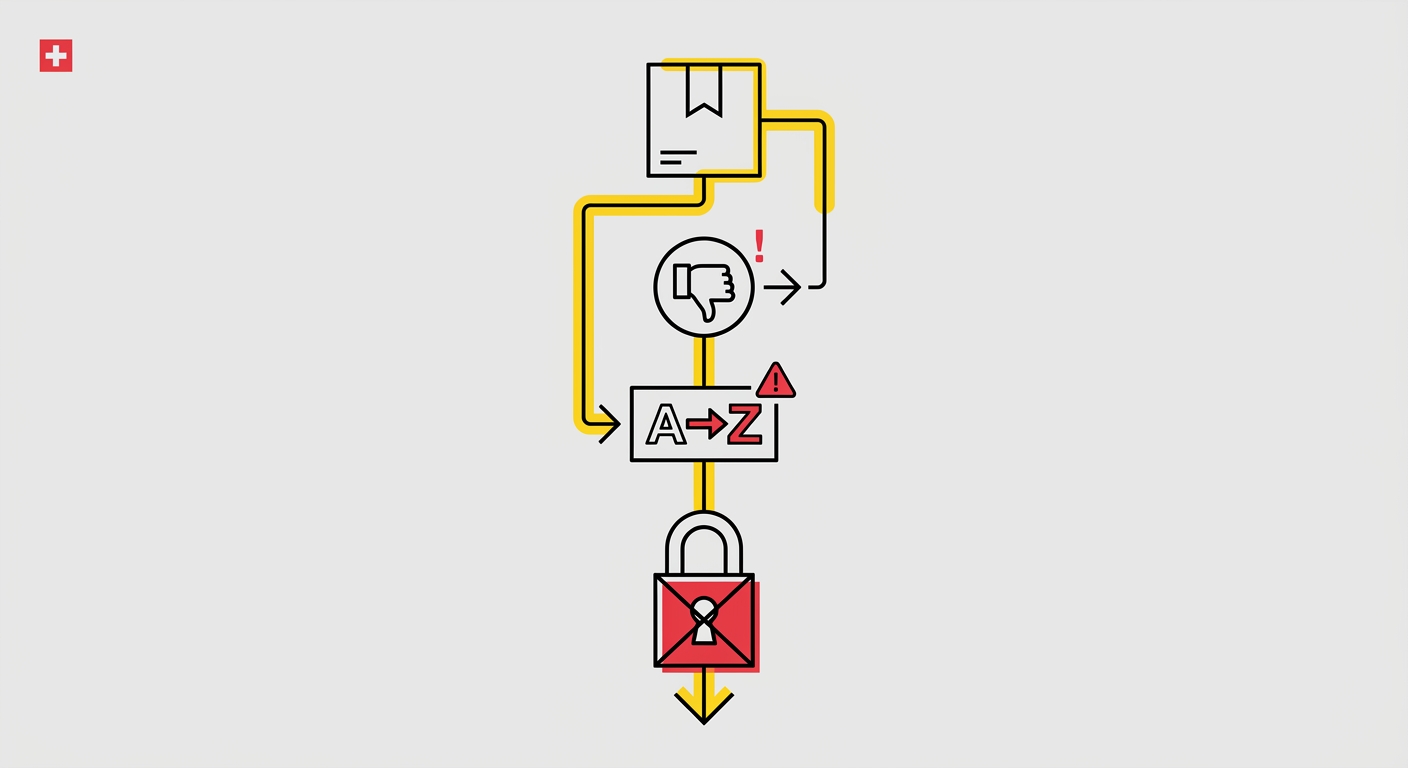
Understanding the pathway from an INR claim to a deactivated account is essential for every Amazon seller. Here's how the chain reaction works.
Step 1: The INR Claim Is Filed
A buyer opens a claim either through their Amazon order page (selecting "Package didn't arrive") or by contacting Amazon customer service directly. Amazon then investigates and may grant the refund, even if you shipped the item on time and have tracking confirmation.
Step 2: It Hits Your ODR
ODR measures customer dissatisfaction through three specific metrics: negative feedback ratings, A-to-Z Guarantee claims, and credit card chargebacks. Amazon calculates ODR by dividing total defective orders by total orders within the measurement period, with the critical threshold set at 1%.
When it comes to INR specifically: service-related chargebacks, such as "item not received", will impact your ODR if the customer wins. Fraud chargebacks (unauthorized purchases) do not affect your ODR. Similarly, A-to-Z claims granted in the buyer's favor count against you, while withdrawn or denied claims do not.
Step 3: Your Account Health Rating Drops
Amazon's Account Health Rating (AHR) ranges from 0–1,000 points and directly determines whether sellers maintain selling privileges or face account deactivation. Three core performance pillars — Order Defect Rate, Shipping Performance, and Policy Compliance — form the foundation of AHR calculations based on 180 days of activity.
Critical score thresholds exist at 200+ (Healthy), 100–199 (At Risk), and 99 or below (Deactivation Eligible) with different consequences at each level.
Step 4: Amazon Acts — Often Fast
Amazon typically gives sellers 17 days to resolve ODR issues, but in some cases, accounts with an ODR of 1% or higher may be immediately deactivated. There is no grace period guarantee. Sellers have woken up to a deactivated account with no prior warning — because the system is algorithmic, and the threshold is hard.
You only get 72 hours to appeal before you lose selling privileges completely.
FBM vs. FBA: Who Is Most at Risk?
Not all sellers face INR risk equally. Fulfilled by Amazon (FBA) sellers are significantly more insulated because Amazon controls the shipping — and therefore absorbs the logistics liability. FBA sellers typically have lower ODRs because Amazon is responsible for shipping and order fulfillment.
It's FBM (Fulfilled by Merchant) sellers who bear the full weight of INR claims. As one longtime seller on the Amazon Seller Forums put it plainly: "Welcome to your first of many INR messages as a FBM seller. With the volume I sell I get 2-3 INR messages a day."
The advice that follows from experienced sellers is unanimous: always challenge an INR when you have tracking evidence — but keep your eye on your ODR. If there is a possibility an INR will take you above 1%, you may want to consider refunding in case it goes to an A-to-Z claim.
The "Buy Shipping" Protection You Might Be Missing
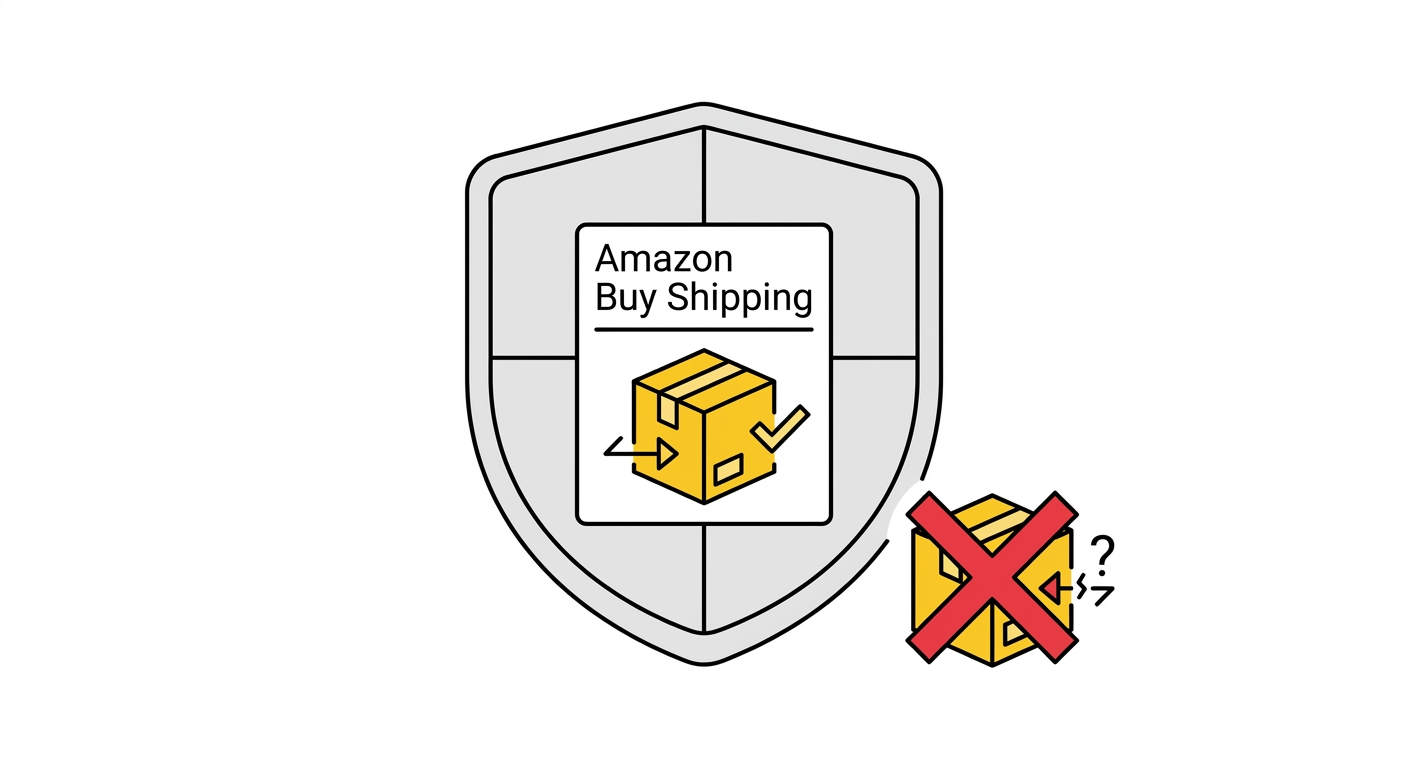
One of the most underused defenses against INR-related deactivation is Amazon's own Buy Shipping service. Beginning on May 1, 2016, when postage is printed through Amazon, and a customer states the item was not received, Amazon itself will investigate and handle the claim.
This is a crucial distinction: if you purchase your shipping labels through Amazon Buy Shipping and an INR claim is filed, Amazon takes on the financial and investigative burden — rather than the claim counting directly against your ODR.
However, there are important caveats. The Amazon INR coverage only applies if you use Buy Shipping, and the buyer still wins if you do not have proof of delivery. For higher-value orders, experienced sellers recommend adding signature confirmation. Key protections include: buying the label with Amazon Buy Shipping Services for INR protection, buying insurance for the full sale price plus shipping cost, requiring signature confirmation, and using UPS or FedEx rather than the postal service.
The consensus from seller forums is clear: for orders over $100, signature confirmation is strongly recommended. For orders under $50, priority mail with basic tracking is typically sufficient. The small added cost is trivial compared to the ODR hit from a granted INR claim.
Real-World Scenarios: When INR Claims Feel Unfair
Reading through Seller Central forums and Reddit threads, a recurring pattern emerges: sellers who did everything right still get burned by INR claims. Tracking shows "delivered." The buyer says they found nothing. Amazon sides with the buyer anyway.
One new FBM seller described losing seven items to a single buyer who waited until USPS logistics showed delivery, then filed a claim saying they didn't see the items on camera. The seller submitted the USPS order number and screenshots of the confirmed delivery — and Amazon still refunded the buyer in full.
This isn't an isolated story. Seller forums are full of similar accounts. The problem is compounded by return fraud patterns: most INR claims are for items worth more than $250. Higher-value shipments attract more fraudulent claims, which is precisely why signature confirmation becomes non-negotiable at that price point.
The lesson veterans keep repeating: document everything before you ship. Photograph or video your packed items, including serial numbers when applicable. Keep screenshots of all tracking activity.
What Happens to Your Funds During Amazon Account Deactivation?
When Amazon deactivates your account, your listings are removed immediately, but your funds don't simply disappear. These funds cover potential refunds and chargebacks. You can still access Seller Central to manage orders, but you won't receive new payouts until Amazon lifts the suspension.
The disbursement hold typically lasts while Amazon processes any outstanding claims and conducts its review. This can stretch from a few weeks to several months in complex cases, making a fast and well-prepared appeal critically important.
How to Appeal an Amazon Account Deactivation: The Plan of Action
If your account has been deactivated due to a high ODR driven by INR claims, your path back runs through a Plan of Action (POA). This is the formal appeal you submit to Amazon's Seller Performance team, and it needs to be specific, professional, and genuine.
A Plan of Action has three parts: what caused the problem, what you fixed, and how you'll prevent it from happening again. Submit it through Seller Central's "Reactivate your account" option.
Here's how to structure an effective appeal for an INR-related deactivation:
1. Root Cause Analysis
Be honest. Don't just say "our ODR exceeded 1%." Identify why INR claims accumulated. Common root causes include:
Not using Amazon Buy Shipping (losing INR protection)
Insufficient handling times relative to actual processing capacity
Carrier selection causing delayed deliveries
No signature confirmation on high-value orders
Listings with inaccurate delivery estimates
Amazon rarely provides full clarity in their suspension notices. They reference vague metrics or terms like "inauthentic" or "violated Amazon's policies." But every case follows the same logic: Amazon believes your account poses a risk to buyer trust.
2. Corrective Actions Already Taken
This section must describe what you have already done — not what you plan to do. Examples relevant to INR issues:
Switched all FBM shipping to Amazon Buy Shipping labels
Added signature confirmation to all orders above a set dollar threshold
Implemented same-day shipping confirmation in Seller Central
Switched to a faster, more reliable carrier for your product category
Added tracking upload automation to ensure 100% valid tracking rate
3. Preventative Measures Going Forward
Ongoing improvements might include monitoring ODR metrics daily using Amazon's Account Health Dashboard, training your team on updated fulfillment and customer service best practices, setting up automated order tracking and alerts for delay prevention, and reviewing all listings for clarity and customer expectations.
Critical Appeal Mistakes to Avoid
Amazon Seller Performance teams are trained to scan for superficial language and templated POAs. You need your appeal to sound like it came from a serious seller — not a chatbot. Amazon respects clarity and structure.
Keep these rules in mind:
Do not blame the buyers — even if the INR claims were fraudulent
Do not blame Amazon — even if their process felt unfair
Do not copy generic templates — Amazon reviewers see thousands of them
Do not include irrelevant information — every sentence should serve the appeal
Be specific with numbers: "We reduced our ODR from 1.4% to 0.6% by implementing X" is far stronger than vague claims
The best tactical move is to keep working on your other orders — quick, proper, quality shipping. Preventing additional issues and complaints while getting positive feedback will help the algorithms even out your metric with positive transactions.
Prevention: Your Best Strategy Against INR-Driven Deactivation
The sellers who never face deactivation aren't lucky — they've built systems. Here's a practical framework drawn from seller community best practices and platform data:
Daily habits:
Check your Account Health Dashboard every morning
Review any new A-to-Z claims and respond immediately (never let them auto-grant)
Confirm shipments in Seller Central on the day of carrier pickup
Per-order habits:
Always purchase labels via Amazon Buy Shipping for FBM orders
Add signature confirmation for orders above your threshold ($100–$250 depending on category)
Keep proof of packing and shipping for high-value items
Set conservative handling times — Amazon calculates late shipment rate based on when you confirm shipment, not actual carrier pickup, so set conservative handling times accounting for worst-case scenarios.
When an INR claim arrives:
Respond within 24 hours
Share the tracking number and carrier scan evidence
Direct buyers to file an A-to-Z claim through their Amazon order page if you shipped via Buy Shipping (Amazon absorbs the cost)
Do not issue voluntary refunds before investigating — it can still count against your ODR under some circumstances
Monitoring thresholds to target:
ODR: below 0.5% (target well under the 1% hard limit)
Late Shipment Rate: below 2% (limit is 4%)
Valid Tracking Rate: above 97% (minimum is 95%)
Pre-Fulfillment Cancellation Rate: below 1% (limit is 2.5%)
Since August 2025, buyers can submit star-only ratings without any written comment, and these count toward ODR just like text-based feedback. Feedback Manager's appeal feature is disabled for ratings without text — making prevention far more important than removal.
When to Hire a Professional Amazon Reinstatement Service
If your account has already been deactivated and your self-submitted appeal was rejected, it may be time to bring in professional help. Amazon reinstatement services specialize in diagnosing the exact reason for suspension, crafting compliant and persuasive POAs, and navigating Amazon's Seller Performance team.
The landscape for these services has matured considerably. As of mid-2025, ASA Compliance Group reports having helped over 5,200 sellers recover their accounts, with a stated 98% success rate across listing and account-level issues. Other reputable services offer similar track records.
Key signs you need professional help:
Your first POA was rejected with no substantive feedback
Your account was deactivated under Section 3 (linked accounts or systemic issues)
You're facing multiple simultaneous violations alongside the ODR issue
Your Amazon revenue represents your primary business income and time is critical
When evaluating a reinstatement service, look for providers who review the specific suspension notice, ask detailed questions about your operations, and don't offer a one-size-fits-all template. A generic letter will be rejected just as quickly as a poorly written one you wrote yourself.
The Bottom Line
An "Item Not Received" claim sounds minor. For an FBM seller, it can cascade into a deactivated account faster than nearly any other performance issue. The difference between sellers who lose their accounts and those who don't often comes down to three things: using Amazon's own shipping tools, maintaining metrics proactively rather than reactively, and knowing exactly how to respond when a claim is filed.
If you're already facing deactivation, the appeal process is survivable — but only with a specific, honest, and well-structured Plan of Action. Generic apologies won't get you reinstated. A clear account of what went wrong, what you've already fixed, and how your systems will prevent recurrence just might.
The sellers who thrive long-term on Amazon aren't those who never face INR claims. They're the ones who built their operations so that when claims happen, they have the evidence, the protection, and the account health cushion to absorb them.
Why Hire Mr. Jeff AMZ to Reinstate Your Amazon Seller Account?
When your Amazon seller account is deactivated for “Item Not Received” claims, A-to-z Guarantee issues, or a rising Order Defect Rate, every next submission matters. A weak or generic appeal can push your case into repeated rejection and make reinstatement more difficult.
At Mr. Jeff AMZ, we help Amazon sellers build a clear, evidence-based reinstatement strategy instead of guessing what Amazon wants to see.
We don't use copy-paste appeal templates. Every case starts with a detailed investigation of the suspension notice, account history, ASIN-level issues, buyer complaints, documentation, and previous appeal attempts. From there, we build a custom reinstatement strategy designed to show Amazon what happened, what actions were taken, and why the account should be reinstated.
For difficult cases, we also use our proven 3-step escalation strategy to move beyond standard appeal loops and reach the right Amazon teams when necessary.
Get a Free Expert Case Review
If your Amazon seller account is currently suspended, do not risk another rejected appeal.
Request a Free Expert Case Review, and our Amazon reinstatement specialists will analyze your case, identify the likely root cause, and explain the best strategy to restore your selling privileges as quickly and safely as possible.
How It Works
Fill out the form on our website.
Tell us what happened with your Amazon account.
Share your suspension notice or performance notification.
Get a personal consultation with an Amazon reinstatement expert.
Amazon suspensions are stressful, but they are not always final. With the right evidence, the right appeal structure, and the right escalation path, many accounts can be recovered.
👉 Get your free expert case review from the Mr. Jeff AMZ team today.

Author
Helen
Head of Client Success at Mr. Jeff AMZ
Helen leads Sales & Client Success at Mr. Jeff AMZ, guiding Amazon sellers from their first suspension panic to a fully recovered account. With years of frontline experience managing reinstatement cases, she translates Amazon's dense policy language into clear, actionable next steps and keeps sellers informed at every stage of the appeal.
Connect on LinkedInFrequently Asked Questions
What is the Order Defect Rate (ODR) threshold that can trigger Amazon account suspension?
Amazon requires sellers to maintain an Order Defect Rate below 1%. Any percentage above this threshold can trigger warnings, account suspension, or deactivation. For example, with 1,000 orders, just 11 defects would put you at 1.1% ODR, exceeding the limit.
When can buyers file an Item Not Received (INR) claim on Amazon?
Buyers can file an INR claim after the earlier of: 3 calendar days after the maximum estimated delivery date or 30 days after the order date. The latest a buyer can file is 90 days from the maximum estimated delivery date.
Which types of claims count against my Order Defect Rate?
Your ODR is affected by three metrics:
- Negative feedback ratings
- A-to-Z Guarantee claims granted in the buyer's favor
- Service-related credit card chargebacks (like "item not received")
What are the Amazon Account Health Rating (AHR) score thresholds I need to know?
Amazon's AHR ranges from 0-1,000 points with three critical thresholds: 200+ (Healthy), 100-199 (At Risk), and 99 or below (Deactivation Eligible). The score is based on 180 days of activity across Order Defect Rate, Shipping Performance, and Policy Compliance.
Will Amazon refund buyers even if I have tracking proof of delivery?
Yes, Amazon may grant refunds to buyers even if you shipped on time and have tracking confirmation. Amazon prioritizes customer experience and may side with the buyer despite evidence of shipment, which is why INR claims are particularly challenging for sellers.
How quickly can a few INR claims affect my seller account?
For high-volume FBM sellers, just 2-3 INR claims in a single month can push your account into the danger zone. For newer sellers with lower volume, every defect carries enormous weight since the percentage calculation is based on total orders.
How long does Amazon typically give sellers to resolve Order Defect Rate issues?
Amazon typically gives sellers 17 days to resolve ODR issues before taking action. However, the company often acts fast once thresholds are exceeded, making it crucial to monitor your metrics closely and respond immediately to any warnings.