Amazon Tips
Amazon Appeal Template to Reinstate Amazon Seller Account
March 10, 2026

Key Takeaways
- Amazon rejected 19 AI-written appeals from seller Aaron before professional reinstatement because ChatGPT appeals failed to guide Amazon toward supplier verification despite strong evidence.
- AI tools generate Amazon appeals using forum posts and generic templates without analyzing specific suspension triggers like invoice mismatches, supplier gaps, or brand authorization issues.
- Successful Amazon reinstatement requires structured strategy across three stages: Seller Central submission with supplier verification request, Account Health escalation, and external BBB complaint if needed.
- Template appeals fail Amazon review because they contain identical patterns like generic apologies, vague corrective actions, and no verifiable evidence references that reviewers immediately recognize.
- Amazon appeal letters must include four elements: direct acknowledgment of the specific violation, accurate root cause explanation, corrective actions already completed, and concrete preventive measures with evidence.
When an Amazon seller account gets suspended, most sellers immediately search for:
“amazon appeal template to reinstate seller account.”
The idea is simple: copy a proven appeal letter, paste your details, and Amazon reinstates your account. Unfortunately, that approach almost never works.
Amazon’s appeal process is not a template exercise. It is a structured compliance investigation where Amazon evaluates whether your explanation and evidence prove that the policy violation has been resolved.
For official guidelines, refer to How to appeal an account suspension.
Today many sellers try to shortcut this process by asking ChatGPT, Claude, or Gemini to write their appeal. This creates a serious problem.
AI tools do not have real reinstatement experience.
They do not understand how Amazon’s enforcement systems evaluate appeals.
And most importantly, they cannot analyze the specific context of your case.
Instead, they generate responses based on:
forum discussions
generic appeal templates
blog posts written by sellers guessing what works
As a result, the appeal often looks generic, unfocused, and disconnected from the actual reason the account was suspended.
Amazon sees this immediately. And the appeal gets rejected.
Why Amazon Rejects AI-Written Appeal Letters
Amazon receives thousands of appeals every day. Over time, their systems and their reviewers have become extremely good at identifying generic or templated submissions.
AI-generated appeals typically fail for three reasons.
1. They do not identify the real root cause
Amazon suspension notices are often vague.
For example:
“Amazon has concerns about the authenticity of the items listed in your inventory.”
This message does not explain the real trigger.
The actual issue could be: supplier verification problems, invoice formatting issues, mismatch between invoice and ASIN details, brand authorization gaps, or supply chain traceability problems.
AI cannot determine which of these triggered the suspension.
It produces a general explanation and Amazon immediately sees that the appeal does not address the real issue.
2. AI appeals look templated
AI models generate text using patterns from existing content. This means most AI appeals contain the same elements:
generic apologies
vague statements like “we take this issue seriously”
standard Plan of Action structure copied from online templates
long paragraphs without concrete evidence references
To Amazon reviewers, this looks like a copy-paste appeal. Template-style appeals rarely move forward.
3. AI cannot build a real reinstatement strategy
A successful Amazon appeal is not just a letter. It is a case strategy.
Professionals who work with reinstatement cases approach appeals similarly to legal cases:
Identify the violation trigger
Investigate the root cause
Collect verifiable evidence
Align the explanation with Amazon policy
Present the case clearly to the reviewer
AI tools skip most of this process and jump directly to writing the appeal. That is why AI appeals fail even when the seller has strong evidence.

AI-generated appeals lack the strategic depth of professional reinstatement cases
Example of a Template Amazon Appeal Letter
Below is a typical example of an appeal generated from templates or AI tools.
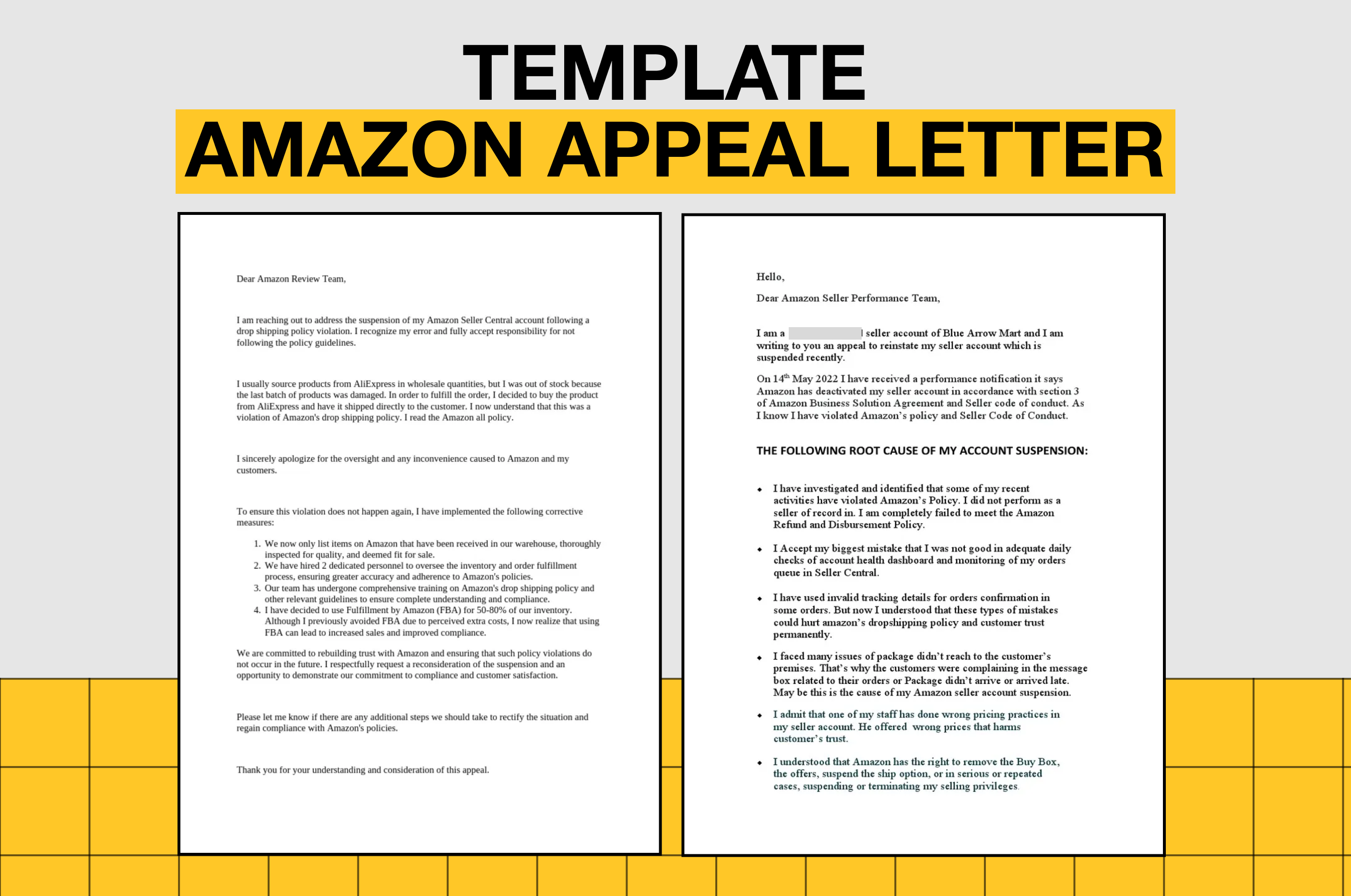
At first glance, this looks professional. But from Amazon’s perspective, it has major problems.
The letter does not:
identify the specific violation
explain the root cause
reference any evidence
provide verifiable actions
guide the reviewer through documents
It is completely generic. This type of appeal could apply to any suspension type, which means it applies to none.
And Amazon reviewers recognize this instantly.
Case Study: 19 Rejected Appeals
👉 Full Case Review: How We Reinstated an Amazon Seller Account Suspended Under Section 3
In January 2026, an experienced Amazon seller named Aaron contacted our team at Mr.Jeff AMZ.
His Amazon seller account had been deactivated back in September under Section 3 of the Amazon Business Solutions Agreement, after Amazon raised concerns about the authenticity of the products listed in his inventory.
Aaron was convinced the suspension was a mistake. His supply chain appeared legitimate:
he worked with an authorized distributor
he had valid commercial invoices
he had written confirmation from the brand
Confident that the situation could be resolved quickly, Aaron decided to handle the appeals himself. Over the following months, he submitted 19 appeals through Seller Central.
Every single appeal was rejected. Amazon repeatedly responded with the same reasons:
“Insufficient evidence”
“Unable to verify authenticity”
Meanwhile, Aaron’s account remained deactivated and every week of suspension was causing growing financial losses for his business.
Eventually, he decided to seek professional help and contacted Mr.Jeff AMZ.
Why Amazon Kept Rejecting the Appeals
During the initial consultation, our reinstatement specialist Rick carefully reviewed the appeals Aaron had submitted.
The key problem became clear almost immediately.
All of Aaron’s appeal letters had been written using ChatGPT based on templates he found online.
The letters sounded professional, but they were generic and strategically incorrect.
At the same time, the evidence Aaron had was actually strong:
clean commercial invoices
proper supplier information
brand correspondence confirming distribution
matching product details
However, the appeal letters did not guide Amazon toward supplier verification, which was the critical missing step.
As a result, Amazon reviewers could not easily verify the supply chain and continued issuing the same response: “Unable to verify authenticity”.
This case clearly demonstrates an important reality:
Even strong evidence will not lead to reinstatement if the appeal letter and Plan of Action are weak or misaligned with Amazon’s verification process.
How Mr.Jeff AMZ Reinstated the Account
Our team rebuilt the reinstatement strategy from the ground up and approached the case in three stages.
Stage 1 — Seller Central Submission
We prepared a fully rebuilt appeal and submitted it through Seller Central with a clear objective: request direct supplier verification.
The appeal package included:
a structured explanation aligned with Amazon policy
clearly organized commercial invoices
explicit supplier contact details
a brand confirmation letter
a clear request for Amazon to verify the supplier directly
Stage 2 — Account Health Team Communication
When automated responses continued, we escalated the case through the Account Health Team.
The goal was to move the case beyond automated or surface-level review and highlight the missing supplier verification step that had not been addressed in Aaron’s previous appeals.
Stage 3 — External Escalation
When Amazon still remained inactive, we initiated external escalation.
Our team compiled all case documentation and filed a detailed professional complaint with the Better Business Bureau (BBB). This created an official external documentation trail and significantly increased executive visibility of the case.
Shortly after this step, Amazon completed an internal review and fully reinstated Aaron’s seller account.
What This Case Proves
This case highlights several critical lessons for Amazon sellers.
1. Strategy is the most important part of reinstatement.
Successful appeals require structured, sequential actions. Random submissions in Seller Central or repeated calls to the Account Health Team rarely work without a clear strategy.
2. AI-generated appeals often lead to rejection.
Tools like ChatGPT, Claude, or Gemini do not have real experience with Amazon reinstatement cases and do not understand how Amazon’s internal review process works. They rely on forum posts and generic templates that ignore the specific context of your case.
This is where professional experience and deep knowledge of Amazon policy become decisive.
3. Repeated appeals without solving the root cause will not work.
If Amazon rejects your appeal, there is always a reason. Simply resubmitting the same appeal or making small wording changes rarely changes the outcome.
Your appeal must accurately address the root cause and follow Amazon’s required structure.
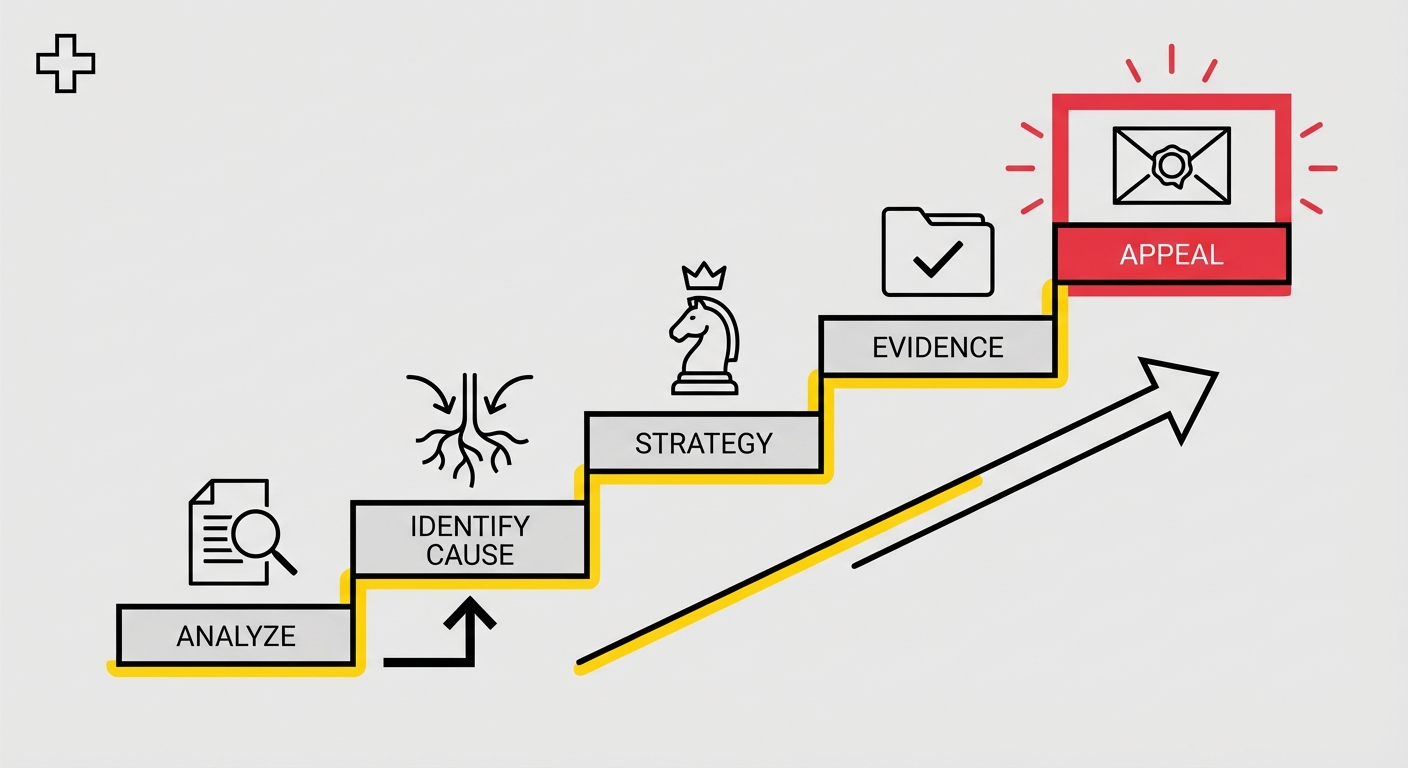
Step-by-Step Process for Writing a Successful Amazon Appeal
A successful reinstatement usually follows a structured process. Skipping steps dramatically increases the risk of rejection.
Step 1 — Analyze the suspension notice
Carefully review:
the policy referenced by Amazon
the affected ASINs
the documents requested
the exact wording of the violation
Step 2 — Identify the root cause
Determine what Amazon could not verify.
Common triggers include:
invoice issues
supplier verification problems
authorization gaps
supply chain inconsistencies
Step 3 — Build an appeal strategy
Decide: what evidence is required, how the documents should be structured, how the appeal narrative should guide the reviewer.
Step 4 — Prepare evidence
Evidence must be: verifiable, clearly labeled, logically organized.
Step 5 — Write the appeal letter
Only after completing the previous steps should the appeal letter be written.
What Does a Well-Crafted Amazon Appeal Letter Look Like?
A strong Amazon appeal letter is clear, factual, and structured around Amazon’s verification process.
Its purpose is not to “convince” Amazon emotionally, but to demonstrate that the violation has been fully understood, corrected, and will not happen again.
Amazon reviewers evaluate hundreds of appeals every day. They are not looking for long explanations or polished language. They are looking for clear root cause analysis, concrete corrective actions, and verifiable preventive measures.
Below are the key elements that a well-crafted appeal letter should include.
1. A Clear and Direct Introduction
The opening paragraph should immediately clarify why the appeal is being submitted.
Avoid long introductions or unnecessary explanations. Instead, clearly acknowledge the suspension and show that you understand Amazon’s concern.
A good introduction typically includes:
the type of violation referenced by Amazon
a short acknowledgment of the issue
confirmation that you conducted a full investigation
For example, the introduction might briefly explain that Amazon raised concerns about product authenticity or policy compliance and that you carefully reviewed the issue to identify the root cause.
This signals to the reviewer that the seller understands the problem and is addressing it directly.
2. Accurate Root Cause Analysis
The most important part of the appeal letter is identifying why the violation happened.
Amazon expects sellers to explain the actual operational failure, not just repeat what the suspension notice says.
Common root causes may include:
incorrect supplier verification procedures
incomplete invoice documentation
mismatches between supplier invoices and ASIN listings
missing authorization from the brand owner
insufficient internal quality control processes
This section should demonstrate that the seller fully investigated the issue and understands exactly what went wrong.
A vague explanation such as “there was an oversight in our internal processes” is not sufficient.
Amazon needs to see that the seller identified the specific operational weakness that caused the violation.
3. Corrective Actions Already Taken
After explaining the root cause, the appeal must clearly show what actions have already been taken to resolve the issue. These actions should address the immediate problem that led to the suspension.
Examples of corrective actions may include:
removing the affected listings from sale
reviewing and verifying supplier documentation
contacting suppliers to obtain proper invoices or authorization letters
updating internal inventory verification procedures
The key point is that the corrective actions must demonstrate that the original issue has already been resolved.
Amazon wants to see that the problem is not still happening.
4. Preventive Measures to Avoid Future Violations
Amazon also wants assurance that the same problem will not happen again. This section should outline the systems or processes implemented to prevent future policy violations.
Examples of preventive measures include:
implementing stricter supplier verification procedures
introducing internal documentation audits before listing products
improving quality control checks for product sourcing
training staff on Amazon compliance policies
These actions should be specific and operational, showing that the seller has improved their internal processes.
Generic statements such as “we will be more careful in the future” are not persuasive.
5. Referencing Evidence Clearly
A well-crafted appeal letter should guide the reviewer directly to the supporting evidence. If documents are attached, the letter should clearly reference them.
Examples include:
commercial invoices
supplier contact information
brand authorization letters
product documentation
Evidence should be organized, clearly labeled, and easy to review. When Amazon reviewers can quickly verify the documents provided, the chances of reinstatement increase significantly.
Responsibility and Accountability
One important element many sellers overlook is taking responsibility.
Amazon expects sellers to acknowledge that something in their process failed. Blaming customers, suppliers, or Amazon itself rarely leads to successful reinstatement.
Instead, the appeal should demonstrate that the seller:
understands the violation
accepts responsibility for the operational failure
implemented corrective actions to resolve the issue
This shows Amazon that the seller is committed to maintaining marketplace integrity.
Final Thought
A well-crafted Amazon appeal letter is not about writing a persuasive essay. It is about presenting a clear operational explanation supported by verifiable evidence and structured corrective actions.
When the appeal demonstrates a genuine understanding of the violation and provides a credible solution, Amazon reviewers can quickly verify the information and move the case toward reinstatement.
This is what separates a professional appeal strategy from a generic template.
Get Professional Help With Your Amazon Account Reinstatement
If your Amazon seller account has been suspended and you are unsure how to proceed, it may be worth speaking with a specialist who works specifically with Amazon account reinstatement cases. An experienced professional can help analyze your suspension notice, identify the root cause of the violation, and prepare a structured Plan of Action (POA) that addresses Amazon’s concerns.
At Mr. Jeff AMZ, our team has successfully reinstated 600+ Amazon seller accounts, including complex cases involving:
Section 3 suspensions
authenticity complaints
related accounts
dropshipping violations
Our reinstatement specialists carefully analyze your suspension notice, review your documents, and identify the exact trigger that caused the enforcement. Based on this analysis, we build a structured reinstatement strategy aligned with Amazon policy.
The Mr. Jeff AMZ team is available to help you regain your selling privileges and get back to selling on Amazon. Fill out the form on our website and briefly describe your issue — one of our specialists will contact you immediately. We provide a Free 30-minute consultation to get started.
So what are you waiting for? Contact us today and get your Amazon seller account back.

Author
Helen
Head of Client Success at Mr. Jeff AMZ
Helen leads Sales & Client Success at Mr. Jeff AMZ, guiding Amazon sellers from their first suspension panic to a fully recovered account. With years of frontline experience managing reinstatement cases, she translates Amazon's dense policy language into clear, actionable next steps and keeps sellers informed at every stage of the appeal.
Connect on LinkedInFrequently Asked Questions
Why do Amazon appeal templates and AI-generated appeals usually fail?
Templates and AI-generated appeals fail because they don't address the specific root cause of your suspension and look generic to Amazon reviewers. Amazon's systems are trained to identify copy-paste submissions that lack concrete evidence and personalized case analysis. Additionally, AI tools base their responses on outdated forum posts and generic templates rather than actual reinstatement experience.
What are the main reasons Amazon rejects AI-written appeal letters?
Amazon rejects AI appeals for three key reasons: 1) They fail to identify the real root cause behind vague suspension notices, 2) They contain templated language like generic apologies and standard structures that reviewers immediately recognize, and 3) They lack a comprehensive reinstatement strategy with verifiable evidence and proper policy alignment.
What's the difference between a template appeal and a professional reinstatement strategy?
A template appeal is simply a copy-paste letter with your details inserted, while a professional reinstatement strategy treats your case like a legal matter. Professionals investigate the violation trigger, collect verifiable evidence, align explanations with Amazon policies, and present a clear case to reviewers – steps that AI tools and templates completely skip.
Can ChatGPT or other AI tools effectively write Amazon appeals?
No, AI tools like ChatGPT, Claude, or Gemini cannot effectively write Amazon appeals because they lack real reinstatement experience and cannot analyze your specific case context. They generate responses based on generic forum discussions and blog posts, resulting in unfocused appeals that don't address the actual suspension reason.
What does Amazon actually look for in a successful appeal?
Amazon wants to see that you've identified and resolved the specific policy violation through a structured compliance investigation. Your appeal must demonstrate understanding of the real issue (not just the vague suspension notice), provide concrete evidence of resolution, and align with Amazon's policies – not generic apologies or promises.
Why are Amazon suspension notices often vague, and how should sellers respond?
Amazon suspension notices are intentionally vague (like "concerns about authenticity") because the actual triggers could be various issues like supplier verification, invoice formatting, or brand authorization gaps. Sellers must investigate beyond the surface message to identify the real root cause before crafting their appeal, something templates and AI cannot do.
What elements make an appeal look 'templated' to Amazon reviewers?
Amazon reviewers recognize templated appeals by their generic apologies, vague statements like "we take this issue seriously," standard Plan of Action structures copied from online sources, and long paragraphs without concrete evidence. These patterns are common in both traditional templates and AI-generated content, leading to immediate rejection.