
Amazon Tips
How to Submit an Appeal to Amazon Seller Central: 2026 Best Practices for Amazon Sellers
January 25, 2026
Key Takeaways
- Over 70% of Amazon seller appeals fail on first submission because they focus on excuses instead of proving compliance and verifiable corrective actions.
- Amazon's 2026 appeal review uses automated policy matching and risk scoring before any manual review, rejecting vague or emotional explanations immediately.
- A successful Amazon Plan of Action must include three sections: root cause identification, completed corrective actions with dates, and systematic preventive measures.
- Submitting multiple weak appeals without structural changes reduces reinstatement probability over time by signaling unresolved risk to Amazon's review system.
- Amazon appeal responses typically arrive within three to seven business days, with sellers advised to wait at least seven days before professional follow-up.
For experienced Amazon sellers, submitting an appeal is not about “explaining your side.”
It’s about proving compliance, removing risk, and aligning with Amazon’s enforcement logic.
In 2026, Amazon’s appeal review process is more automated, more policy-driven, and far less forgiving of vague explanations. Sellers who rely on generic templates or emotional arguments are seeing repeated rejections, even when the violation itself is fixable.
This guide breaks down how appeals actually work today, what Amazon reviewers expect to see, and how to submit an appeal that has a real chance of approval.
How Amazon Reviews Appeals in 2026 (What Sellers Often Miss)
Most sellers still believe appeals are read like emails. They are not.
In 2026, Amazon appeals are evaluated through a hybrid system:
Automated policy matching
Risk scoring
Manual review only if minimum criteria are met
From our internal data across 600+ reinstatement cases, over 70% of first appeals fail because they:
Don’t directly address the cited policy
Focus on excuses instead of corrections
The difference between emotional appeals and compliance-focused documentation
Lack verifiable proof of change
Key insight:
Amazon is not asking why the issue happened. They are asking why it won’t happen again.If your appeal does not clearly reduce future risk, it will be rejected — regardless of how well written it sounds.
Before You Submit Anything: Decode the Deactivation Message
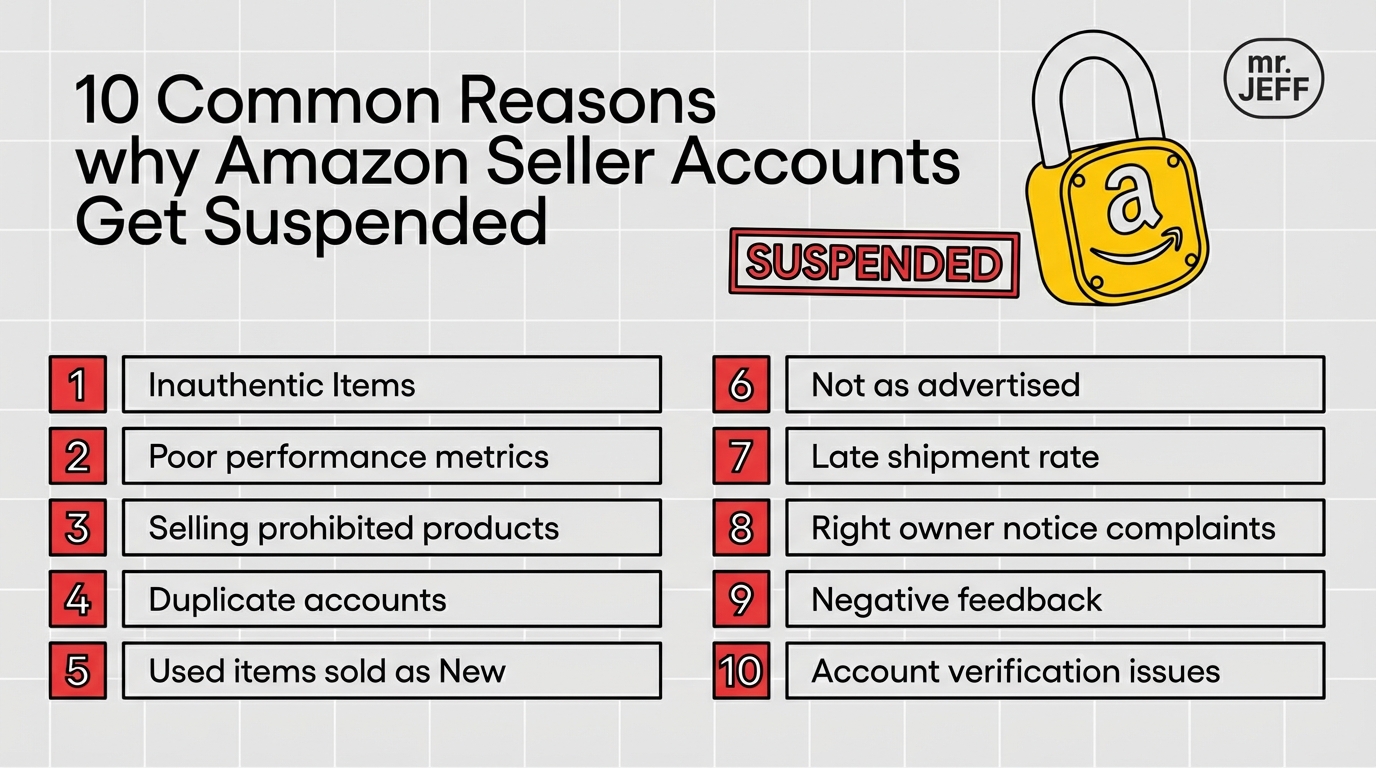
The deactivation notice is not informational—it’s directional. Experienced sellers know this, but still make one critical mistake: They respond to the symptom, not the enforcement trigger.
📌 Case insight:
We’ve seen sellers submit 3–4 appeals for “inauthentic” violations while the real issue was supplier documentation inconsistency, not authenticity itself. Every appeal failed until the root cause was addressed.
Amazon’s messages are intentionally minimal. Submitting appeals without understanding the real enforcement trigger often leads to repeated rejections.
This is why sellers use Ban Decoder by Mr. Jeff — an AI-assisted analysis tool built specifically for suspended Amazon seller accounts.
Ban Decoder provides a policy-aligned reinstatement strategy, based on data from 600+ successfully reinstated Amazon seller accounts.
What Ban Decoder analyzes:
The exact Amazon policy violation that triggered the suspension
Inventory, fulfillment, or sourcing risks flagged by Amazon
Reinstatement success probability, calculated from real cases
A clear step-by-step reinstatement strategy, aligned with Amazon requirements
Why Sellers Use Ban Decoder Before Appealing
Reduces wasted appeal attempts
Prevents policy-misaligned responses
Clarifies whether the case is self-fixable or requires escalation
How to Use Ban Decoder (1-Minute Setup)
Upload your amazon deactivation notice
Ban Decoder analyzes the case using real reinstatement data
Receive a full suspension case analysis within ~1 minute
No registration complexity. No templates. No assumptions. Just a data-driven plan that shows how to move forward with confidence — before you submit another appeal.
→ Get a Full Suspension Case Analysis in Ban Decoder
Preparing Your Appeal: The Foundation of Success
A successful appeal starts with thorough preparation. Rushing to submit without proper planning is the biggest mistake sellers make.
Step 1: Identify the Root Cause
Read Amazon's suspension notice carefully. Look for specific policy violations, performance metrics, or complaint details. Understanding exactly why you were suspended is critical for crafting an effective response.
Step 2: Gather Supporting Documentation
Compile all relevant documents before writing your appeal:
Invoices from legitimate suppliers
Business registration documents
Product authenticity certificates
Shipping and tracking records
Customer communication logs
Step 3: Analyze Your Account Health Dashboard
Review your performance metrics thoroughly. Identify trends, problem areas, and any patterns that contributed to the suspension. This data will support your plan of action.
Writing Your Plan of Action (POA): The Core of Your Appeal
In 2026, Amazon still expects a Plan of Action (POA), but only if it follows a strict internal logic. A winning appeal has three mandatory sections:
Root Cause (What Happened)
Corrective Actions (What You Already Fixed)
Preventive Measures (How Risk Is Eliminated)
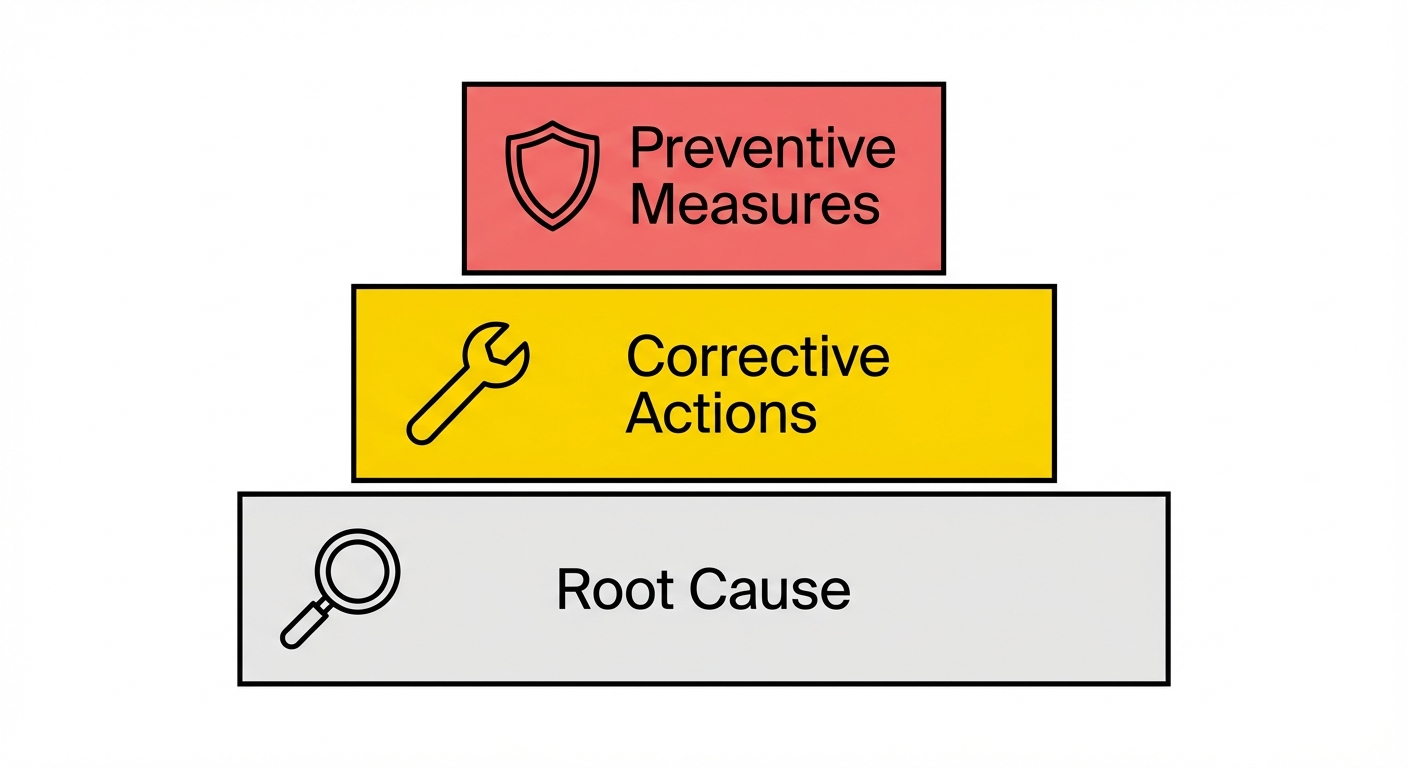
The three mandatory components of a successful Amazon appeal
The Three-Part POA Structure
Part 1: What Happened (Root Cause)
Be specific and take responsibility. Avoid blaming Amazon, customers, or external factors. Demonstrate that you understand the issue completely.
Example: "We identified that 15% of our orders were shipped late due to inadequate inventory management systems and understaffing during peak periods."
Part 2: Immediate Corrective Actions
Detail the specific steps you've already taken to fix the problem. Use bullet points for clarity and include dates and measurable actions.
Example corrective actions:
Hired two additional warehouse staff (completed January 15, 2026)
Implemented new inventory management software (completed January 20, 2026)
Created daily shipping audits to ensure on-time dispatch (ongoing since January 22, 2026)
Part 3: Preventive Measures (How Risk Is Eliminated)
Explain how you'll prevent future issues. Focus on systematic changes, not temporary fixes.
Strong preventive actions include:
New compliance checklists
Supplier audits
Listing approval workflows
Ongoing internal reviews
Think like Amazon: If this seller scales again, will the same violation reappear?
POA Writing Best Practices
Keep it concise: Aim for 500-750 words maximum
Use professional language: No emotional appeals or sob stories
Be specific: Include dates, numbers, and concrete actions
Format clearly: Use bullet points and short paragraphs
Focus on solutions: Spend 80% on fixes, 20% on problems
What NOT to Include in an Amazon Appeal
Even experienced sellers sabotage their own appeals by including:
❌ Emotional language
❌ Threats (“We will contact a lawyer”)
❌ Long business history narratives
❌ Repeated appeals with no structural change
❌ Templates copied from forums or YouTube
Amazon’s systems flag repetitive or generic phrasing.
If your appeal looks familiar, it will be filtered out faster.
📌 Expert note:
Submitting multiple weak appeals can reduce reinstatement probability over time by signaling unresolved risk.
How to Submit Your Appeal Through Seller Central
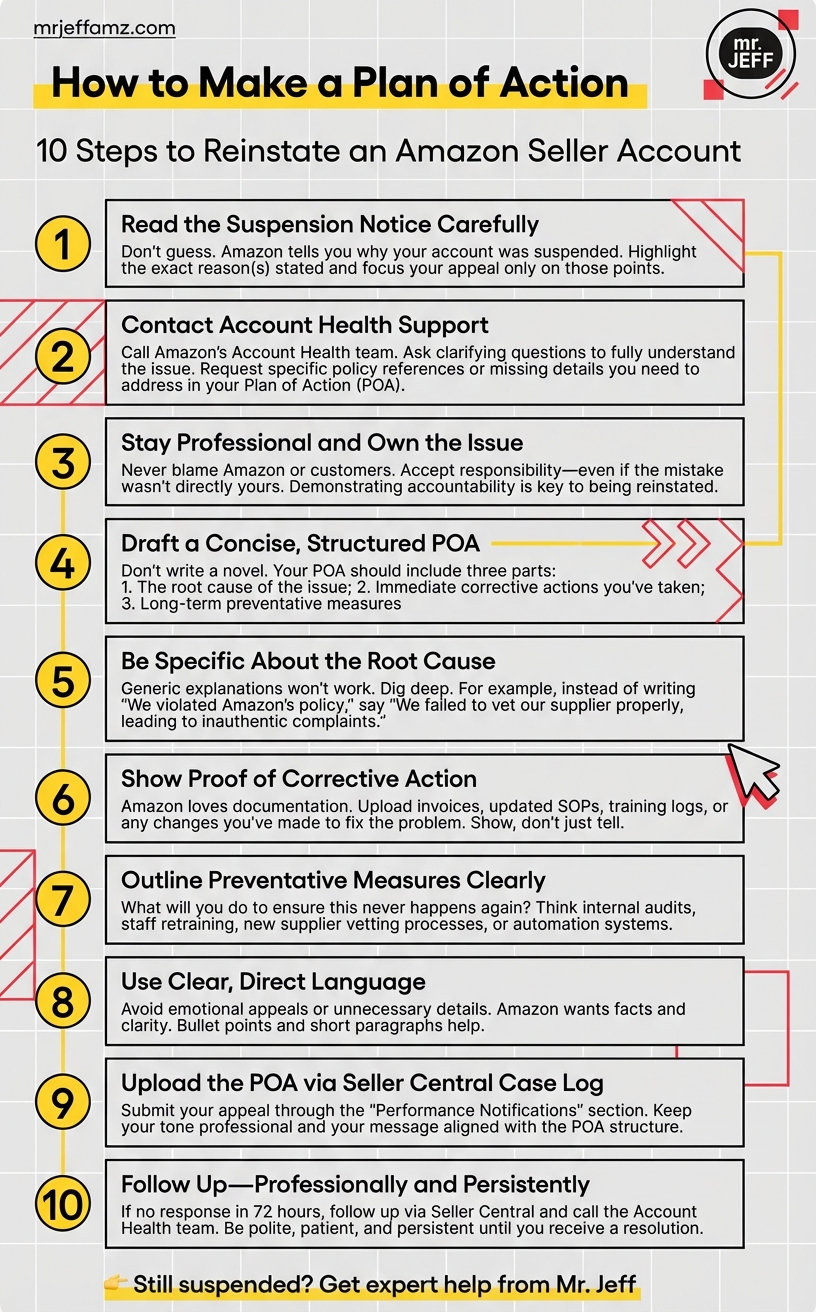
Once your POA is ready, follow these steps to submit your appeal correctly.
Step-by-Step Submission Process
Step 1: Access the Performance Notification
Log into Seller Central and navigate to Performance > Performance Notifications. Find your suspension notice.
Step 2: Click "Appeal" Button
Open the suspension notification and click the "Appeal" or "Appeal Decision" button.
Step 3: Select Appeal Reason
Choose the most appropriate reason from the dropdown menu. Be honest and accurate.
Step 4: Upload Your POA
Copy and paste your Plan of Action into the text field. Ensure formatting is preserved.
Step 5: Attach Supporting Documents
Upload relevant invoices, certificates, or other documentation. Keep files under 5MB each.
Step 6: Review and Submit
Double-check everything before clicking submit. You typically get limited appeal attempts.
Alternative Submission Methods
If the standard appeal button isn't available:
Account Health Dashboard: Check for appeal options under Account Health
Help Menu: Use "Get Support" and select "Selling on Amazon" > "Your Account" > "Suspended Account"
Direct Email: As a last resort, email seller-performance@amazon.com
Common Appeal Mistakes That Lead to Rejection
Understanding what doesn't work is just as important as knowing what does. These mistakes can doom your appeal:
Fatal Appeal Errors
Being Vague or Generic – Amazon receives thousands of appeals daily. Generic responses get rejected immediately.
Denying Responsibility – Blaming others or claiming innocence without evidence undermines credibility.
Emotional Appeals – Stories about financial hardship or family situations don't address Amazon's concerns.
Submitting Without Evidence – Claims without supporting documentation appear untrustworthy.
Ignoring the Actual Issue – Addressing different problems than those cited in the suspension notice shows poor attention to detail.
Timeline and Follow-Up Strategies
After submitting your appeal, patience and strategic follow-up are essential.
Expected Response Times
Initial Response: 24-48 hours for acknowledgment
Full Review: 3-7 business days typically
Complex Cases: Up to 14 days for complicated issues
When and How to Follow Up
7-Day Rule
Wait at least 7 days before following up unless Amazon requests additional information sooner.
Professional Follow-Up Template
"Dear Seller Performance Team, I submitted an appeal on [date] for case [number]. I wanted to confirm receipt and ask if any additional information is needed. I remain committed to maintaining Amazon's high standards."
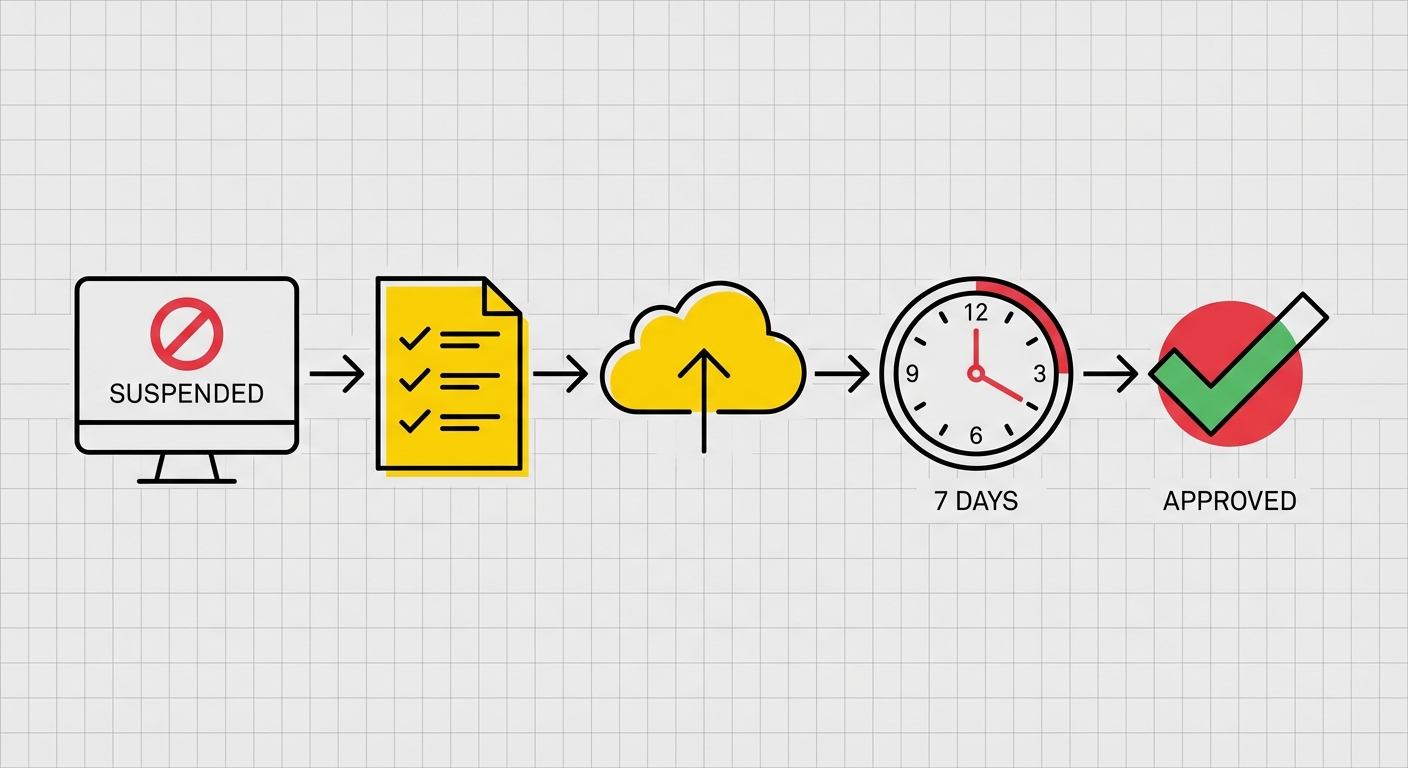
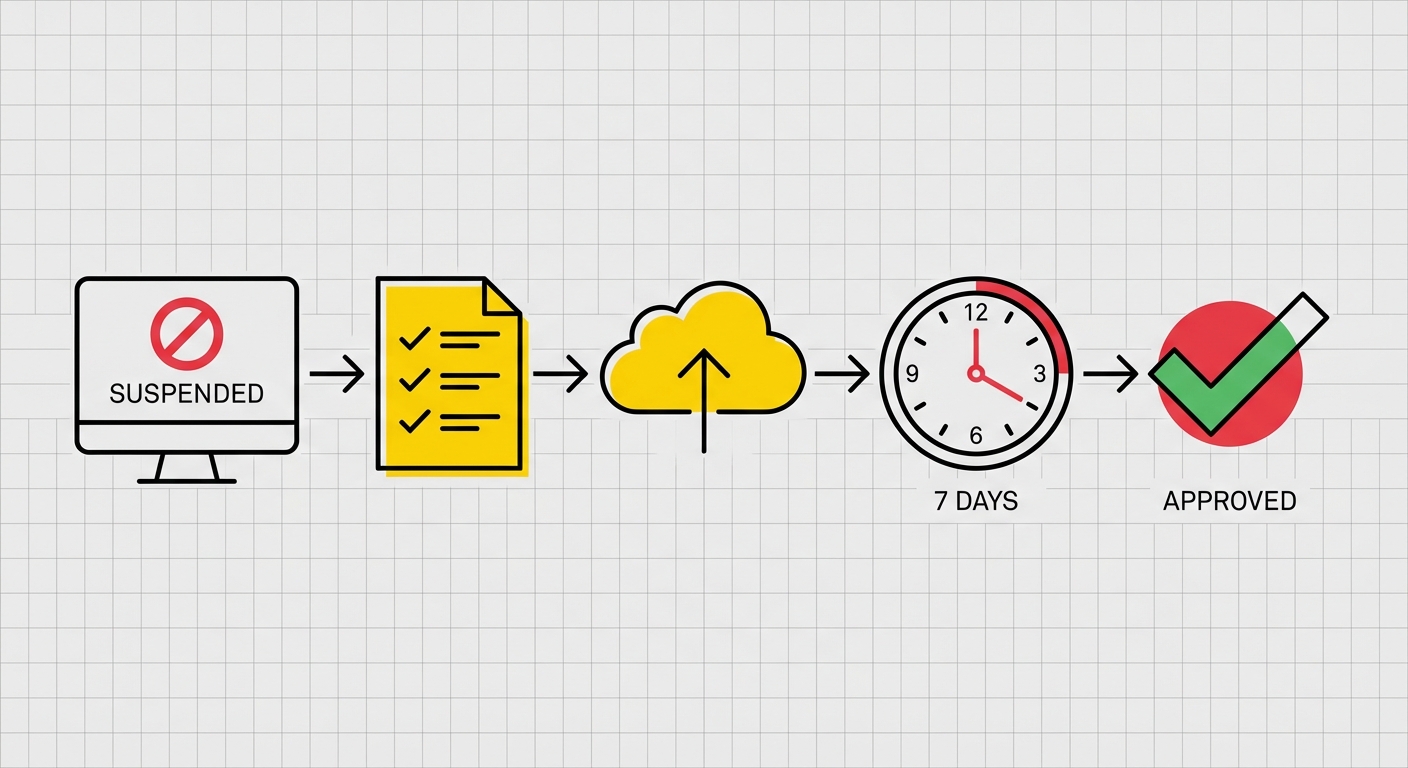
The complete Amazon appeal submission and review timeline
Advanced Strategies for Complex Suspensions
Some suspensions require more sophisticated approaches:
Multiple Violation Appeals
Address each violation separately with dedicated sections in your POA. Show how fixes for one issue positively impact others.
Intellectual Property Complaints
Include communication with rights owners, authorization letters, and proof of authentic sourcing. Consider hiring an IP attorney for complex cases.
Related Account Suspensions
Provide clear documentation showing account separation, different ownership, or legitimate business reasons for connections.
FAQ: Amazon Appeals (2026)
Real questions experienced Amazon sellers ask after a suspension — answered with practical, policy-aligned guidance.
I already submitted multiple Amazon appeals and got rejected. Did I ruin my chances?
Not permanently, but repeated rejected appeals usually signal that the root cause wasn’t addressed. Each rejection tells Amazon there’s still unresolved risk.
Best practice: pause further submissions, identify the enforcement trigger, and only resubmit once you can show new corrective actions and stronger preventive controls.
Amazon says my account remains deactivated without explanation. What should I fix?
This typically means Amazon still sees unresolved risk. After multiple appeals, Amazon often won’t provide additional guidance.
Your next appeal must clearly identify the exact policy being enforced and prove how the risk has been eliminated (with specific actions and evidence).
How long should an Amazon appeal be in 2026?
Clear and structured beats long. A strong appeal is typically 1–1.5 pages, focused on policy alignment, completed corrective actions, and preventive measures.
Reviewers scan for signal, not story. Precision improves approval odds more than length.
Is it okay to say ‘we didn’t violate the policy’ if we genuinely believe that?
In most cases — no. Even if you believe the enforcement is incorrect, Amazon expects:
acknowledgment of the risk they identified
explanation of how that risk is now mitigated
Appeals that argue with Amazon’s decision instead of addressing perceived risk are rarely approved. You can challenge enforcement — but only through structured escalation, not in the initial appeal.
How soon can I submit another Amazon appeal after rejection?
Only submit again when something materially changed. If you resubmit too quickly without new corrective or preventive actions, you’ll often get faster rejections.
Best practice: only resubmit once you can clearly show:
new corrective actions
new preventive controls
or newly identified root cause
Time alone does not improve outcomes — substance does.
Conclusion: Your Path to Reinstatement Success
Successfully appealing an Amazon suspension requires preparation, clarity, and commitment to improvement. By following this guide's strategies—understanding the root cause, crafting a detailed POA, and submitting professionally—you significantly increase your chances of reinstatement.
Remember, Amazon wants sellers who enhance the customer experience. Show them you're committed to being that seller, and reinstatement becomes much more achievable.
Get Professional Help with Amazon Account Reinstatement
Not every Amazon suspension can be handled with a DIY appeal.
At Mr. Jeff AMZ, we specialize in reinstating suspended Amazon seller accounts, even in the most complex cases. Our team has successfully helped 600+ sellers get their accounts back and return to selling.
Insider Expertise
Our specialists include ex-Amazon staff and top Amazon sellers who understand how Amazon reviews appeals behind the scenes.Custom Plans — No Templates
Every Plan of Action (POA) is written from scratch, fully tailored to your specific suspension and account history.Unlimited Revisions
We work on your case until reinstatement — no revision limits, no hidden fees.Dedicated 1-on-1 Support
You’ll have a personal reinstatement expert guiding you through every step of the process.Fast-Track for Urgent Cases
If your business is on pause and time matters, we offer priority handling for urgent reinstatement cases.Honest Case Review
If reinstatement isn’t realistically possible, we’ll tell you upfront. No false promises. No wasted time.
Our reinstatement specialists know exactly what Amazon expects — and how to craft a POA that Amazon actually approves.
Get a full analysis of your Amazon suspension in just 2 minutes
Not sure where to begin your appeal or which strategy gives you the best chance of reinstatement?
Simply upload your Amazon deactivation notice into Ban Decoder and get a full expert case analysis in just 2 minutes.
Expert Policy Analysis
Success Probability Calculation
Instant Reinstatement Strategy Report
No guessing. No generic advice.
Just a clear, data-driven plan to move forward with confidence.

Author
Rick
Senior Reinstatement Consultant at Mr. Jeff AMZ
Rick is a Senior Reinstatement Consultant at Mr. Jeff AMZ with 6 years of experience appealing Amazon suspensions. He specializes in solving complex Amazon issues like Section 3, IP, and review-related enforcement, helping sellers recover deactivated accounts. His superpower is knowing Amazon's policies better than most Amazon reviewers do and building a compelling, watertight case for any position.
Connect on LinkedInFrequently Asked Questions
Why do 70% of first appeals to Amazon fail?
Most first appeals fail because they don't directly address the cited policy, focus on excuses instead of corrections, and lack verifiable proof of change. Amazon isn't asking why the issue happened—they want to know why it won't happen again. Appeals that don't clearly demonstrate reduced future risk get rejected, regardless of how well-written they are.
How does Amazon review appeals in 2026?
Amazon uses a hybrid system that includes: automated policy matching, risk scoring, and manual review only if minimum criteria are met. This means your appeal must first pass automated checks before a human even sees it. The system is more automated, policy-driven, and less forgiving of vague explanations than in previous years.
What is Ban Decoder and how can it help with my appeal?
Ban Decoder is an AI-assisted analysis tool that examines your Amazon deactivation notice to identify the exact policy violation, assess reinstatement probability, and provide a step-by-step strategy. It's based on data from 600+ successfully reinstated accounts and helps prevent wasted appeal attempts by ensuring your response aligns with Amazon's actual requirements.
What's the difference between responding to symptoms vs. enforcement triggers?
Many sellers make the mistake of addressing what appears to be the problem (symptom) rather than the underlying issue Amazon actually flagged (enforcement trigger). For example, an "inauthentic" violation might actually stem from supplier documentation inconsistency, not authenticity itself. Understanding this distinction is critical for successful appeals.
How quickly can I analyze my suspension case with Ban Decoder?
Ban Decoder provides a full suspension case analysis within approximately 1 minute. Simply upload your Amazon deactivation notice, and the tool analyzes your case using real reinstatement data. There's no complex registration process, making it a quick first step before crafting your appeal.
What should I focus on in my appeal instead of explaining why the violation happened?
Focus on proving compliance, removing risk, and aligning with Amazon's enforcement logic. Your appeal should demonstrate concrete changes and provide verifiable proof that the issue won't happen again. Amazon cares about future prevention, not past explanations or emotional arguments.
Why is the deactivation message considered 'directional' rather than just informational?
The deactivation notice isn't just telling you what happened—it's directing you toward what Amazon wants to see fixed. However, Amazon's messages are intentionally minimal, which means you need to decode the real enforcement trigger behind the violation. Misunderstanding this directive leads to policy-misaligned responses and repeated rejections.